Air Conditioning
After the 2025 car show season was over, I kicked off the A/C restoration of Sherman the 1964 Buick Wildcat. The A/C never worked since my dad purchased the car in the 70s, and it has been a long term goal to remedy that. Back in the 70s he removed the A/C to save weight as it was inoperative. 20 years ago I moved the A/C components off my parts car named Herman to Sherman but I knew it wasn't the time back then to get it working. Below, before and after the parts swap.
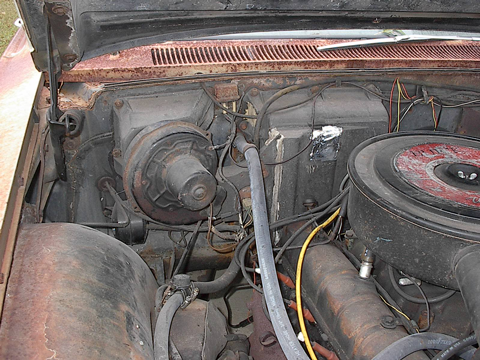
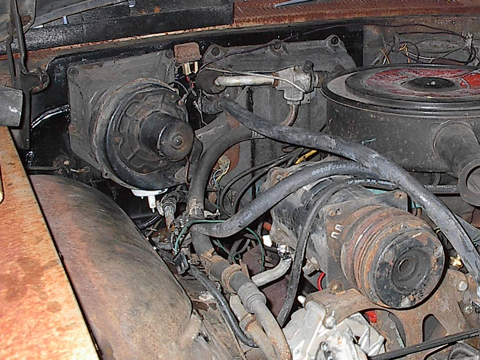
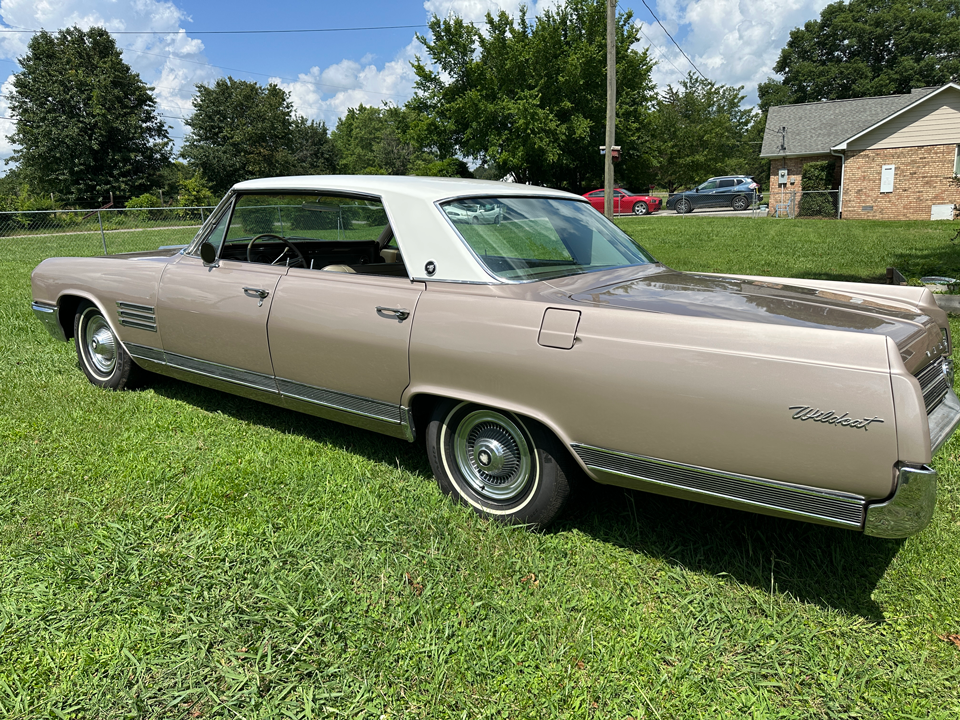
Fast forward to 2025 and the car is almost fully restored including body, paint, and interior. Time for the next project.
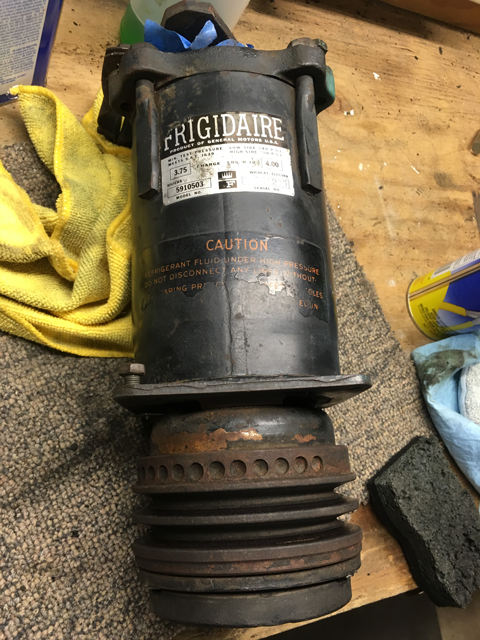
The first step and the longest lead time for the A/C to get rebuilt was the compressor. While the compressor is not original it is close enough for the date codes of the car. While a brand new Alma compressor would be around the same cost, I didn't want metric threads and fasteners on the car. I did a cosmetic restoration on the compressor in 2019, which was nothing more than painting it so it wouldn't look odd against the newly rebuilt and repainted engine. Below, the compressor before the cosmetic only restoration, after cosmetic restoration.
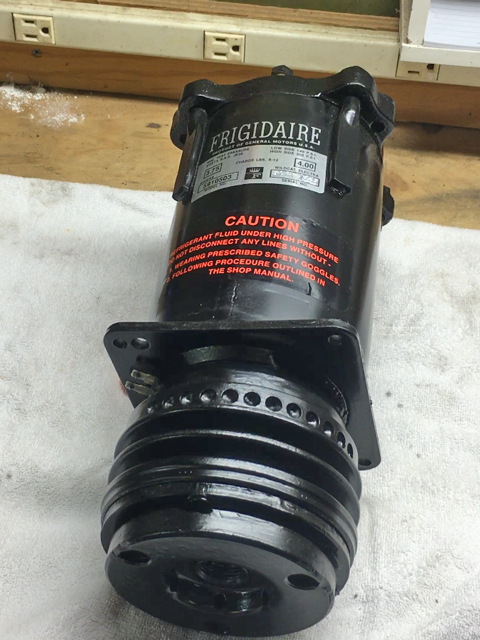
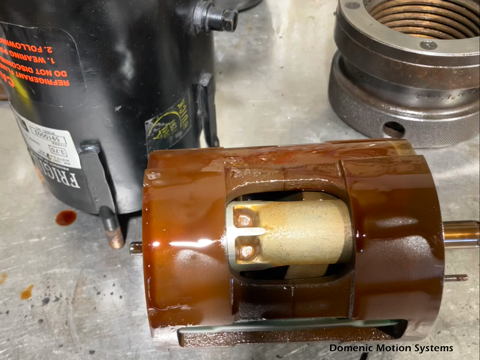
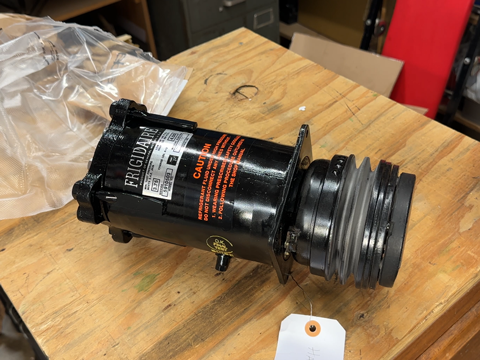
The compressor was rebuilt by a gentleman famous for rebuilding Corvette A6 compressors. Below is all the rust he found in the compressor upon disassembly, and then the after picture. The compressor looks 100% correct.
https://1964buick.com/resto_logs/Air_Conditioning/01Wildcat-AC-Before-1.png
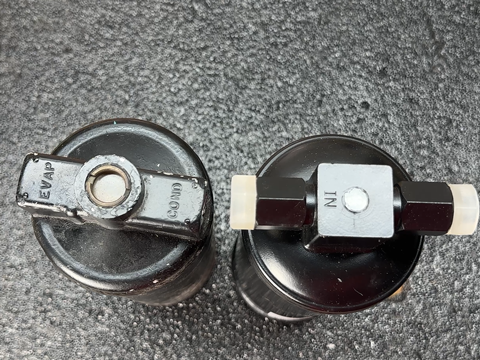
The receiver dryer was the next to be removed because there was a long lead time for restoration. I had purchased a universal replacement at one time, but I didn't like how incorrect it looked. There are no dryers sold that look correct to this style. Old Air Products in Fort Worth was able to put new desiccant and rehab my dryer to new, including a new sight glass. Below, the original and universal, and the restored original.
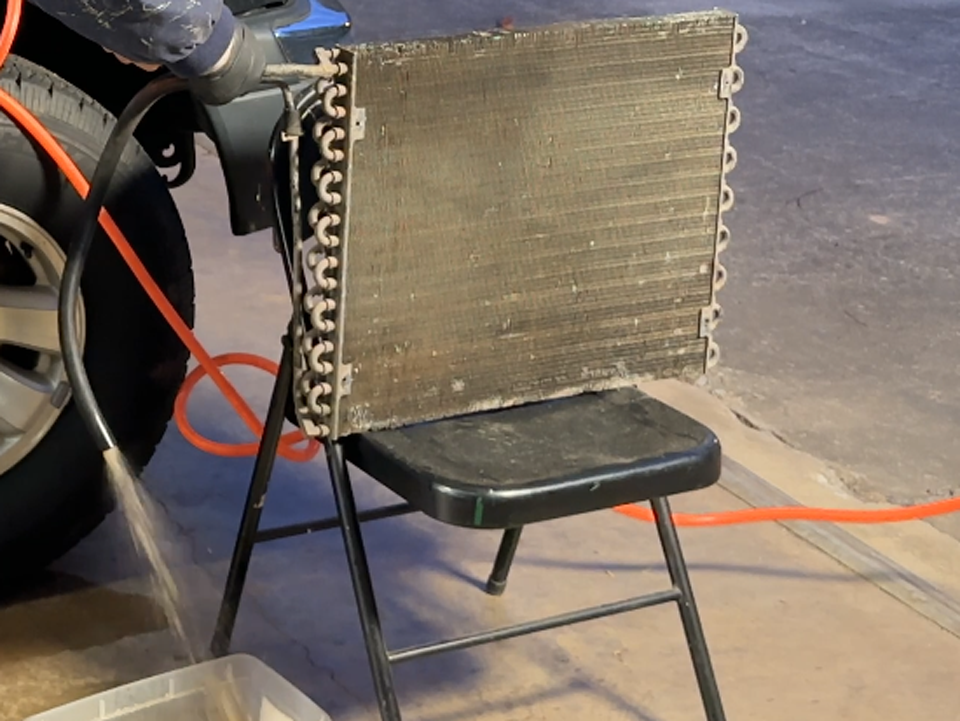
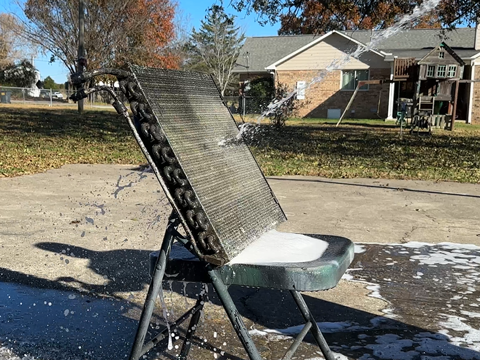
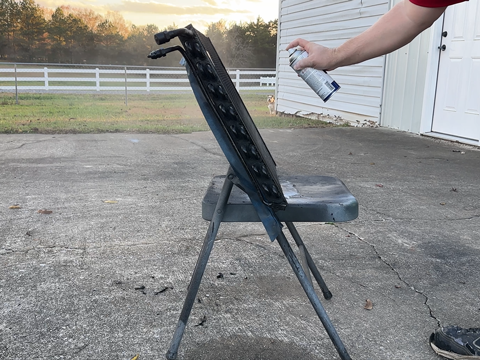
The next step of the restoration was the removal and rehabilitation of the condenser. Many hours were spent straightening the aluminum fins. It was flushed four times with Four Seasons Super Flush solvent, shown below. The first flushes contained rust and rusty particles. It was flushed until clear. The side caps were removed, and the whole unit was cleaned and painted with Eastwood Radiator Paint for the proper look and to maintain proper airflow vs. regular thicker paint.
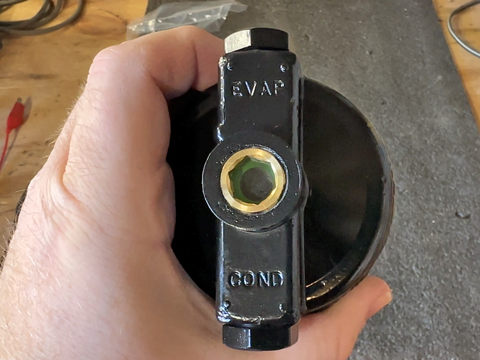
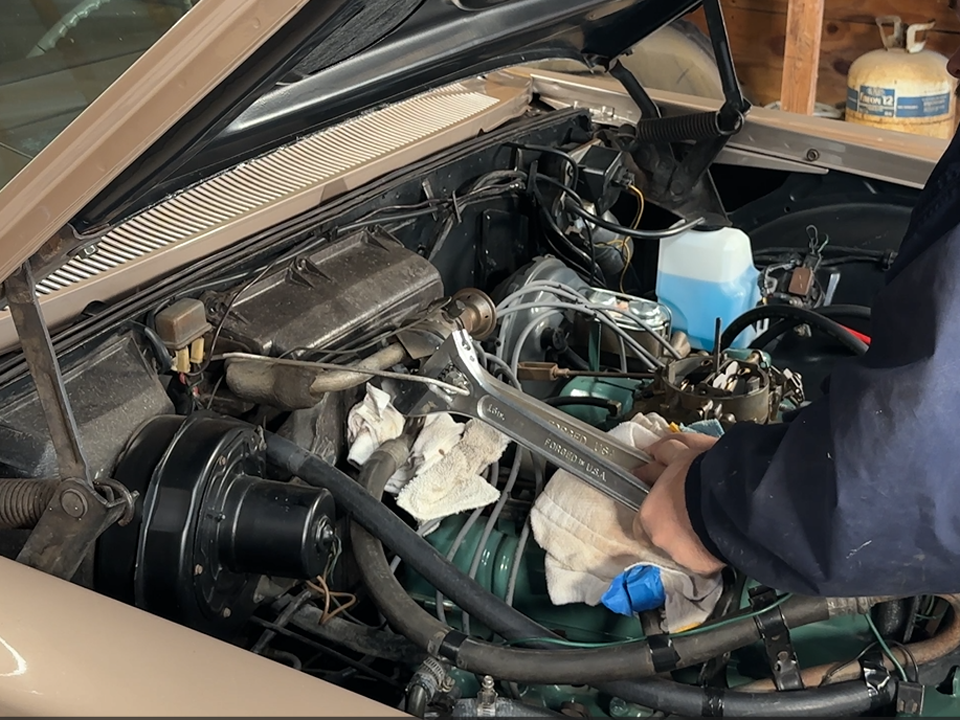
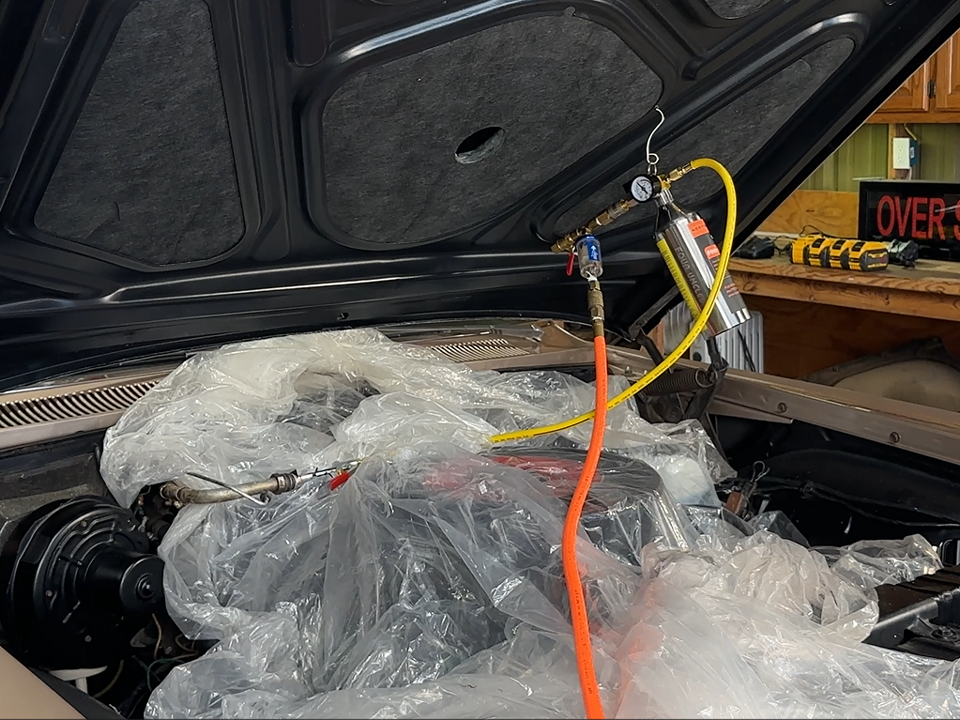
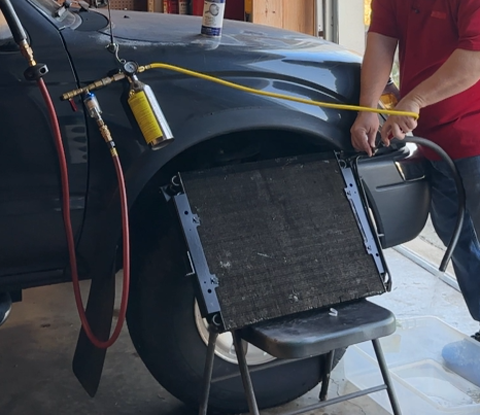
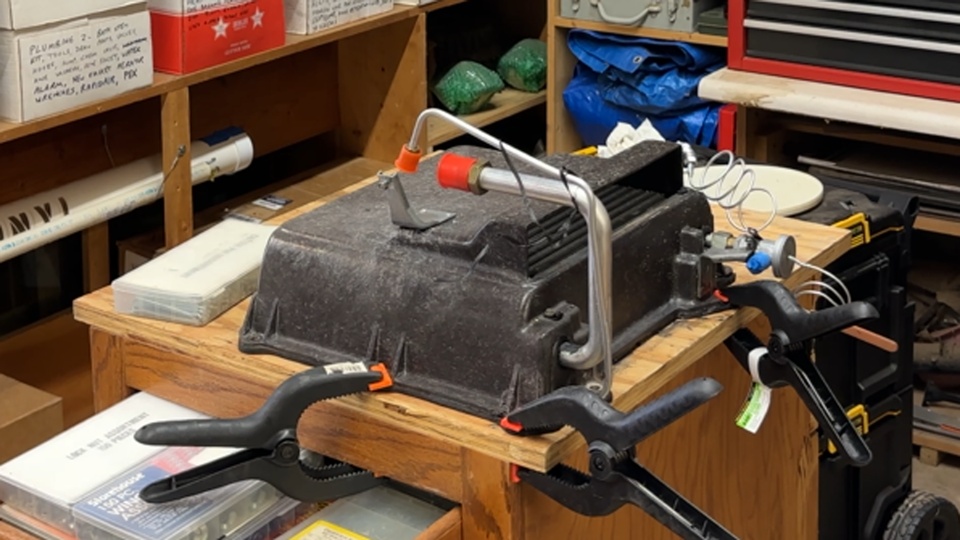
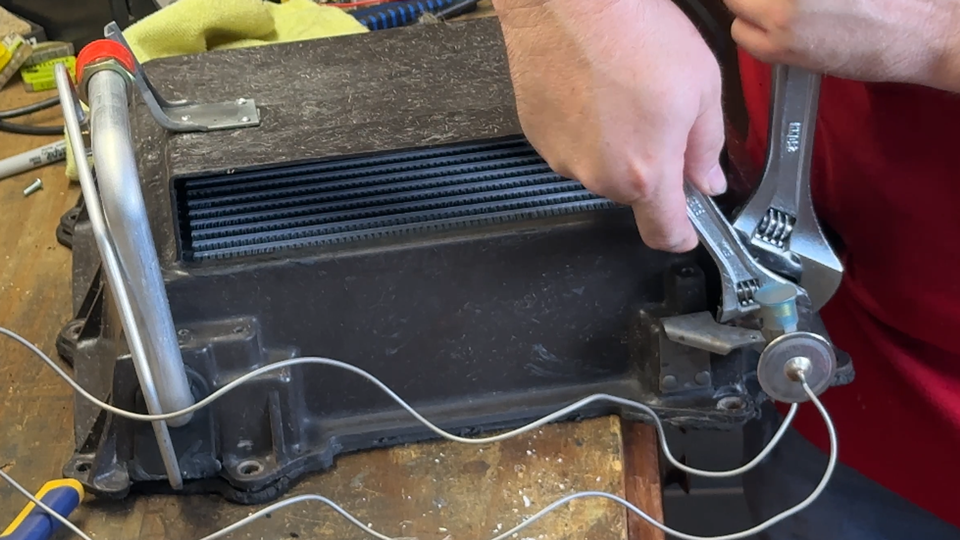
Removal and restoration of the STV was next. I would not have removed the STV had I not found rust in the condenser. I knew the STV had to come off for a proper evaporator flush. I had tried to remove the STV 20 years ago when I put a new seal in it, and couldn't get it to budge. Fast forward 20 years, and I had tools with exceptional leverage. Below was the setup I used.
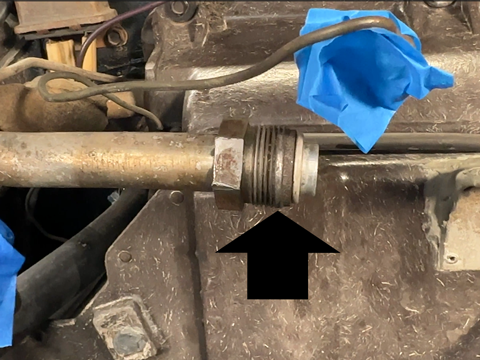
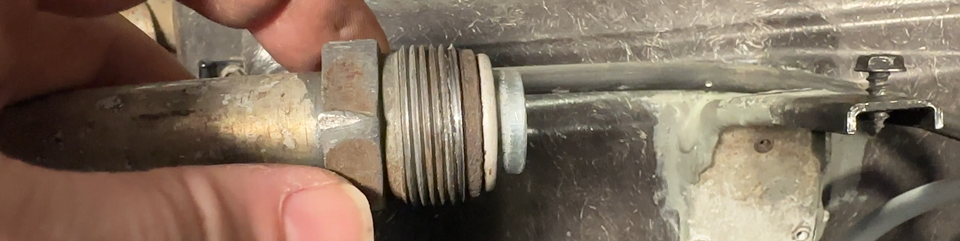
As I removed the STV to evaporator fitting, it took some effort to give, and as I continued unscrewing it, there was abnormal resistance. Once I got the fitting out, it was evident what had happened. Either 61 years ago it was installed cross-threaded, or more than likely galvanic corrosion made the steel fitting and aluminum threads to become one. The very first threads on the male side were semi-obliterated, shown below at left, and this caused the flattening of all threads on the STV as it was removed. Note on the right picture the bottom threads as they should be, and the top threads that are flattened beyond repair.
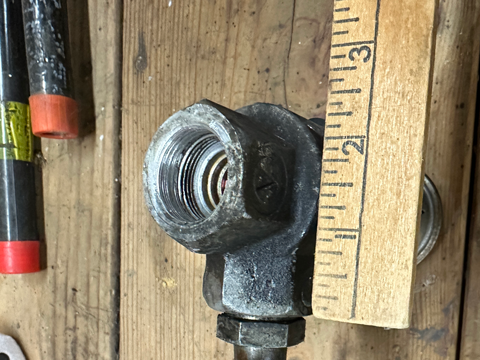
The plan was to send off the STV to The Part Guy LLC to get a new seal in it and to refurbish the original expansion valve at the same time. I tried the forums first, but no one had an STV off a big car. Riviera STVs work backwards. There were none on eBay. With the threads trashed on the STV, I could even run one of the STV eliminator kits. I reached out to James at Best Offer Counts, and he had one just coming into stock off a parts car. Below, that STV and the expansion valve were sent to The Part Guy LLC for rebuilding.
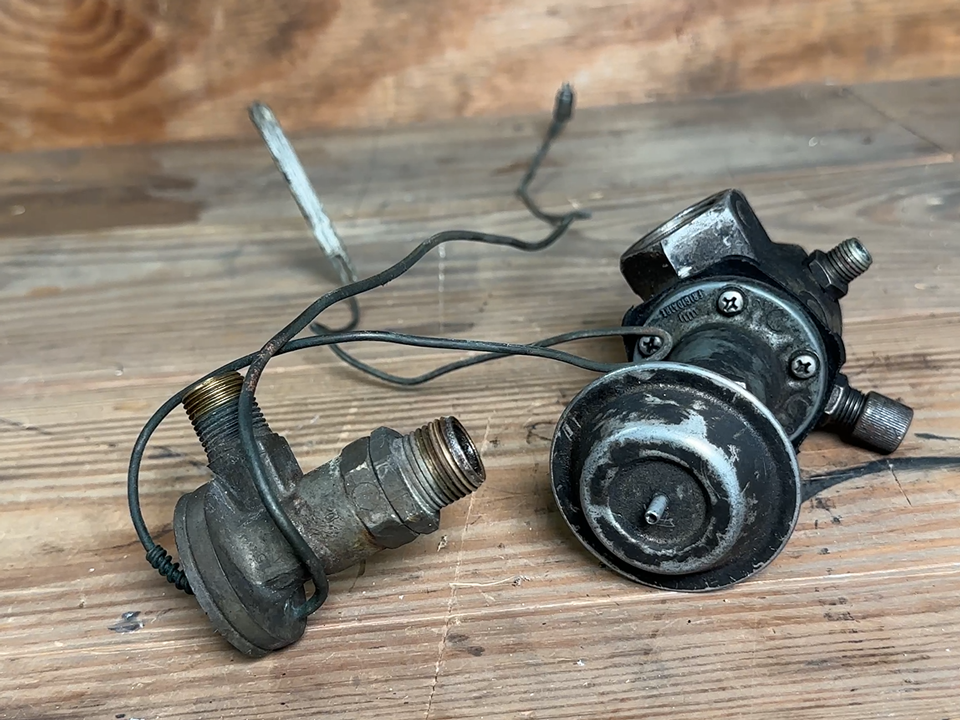
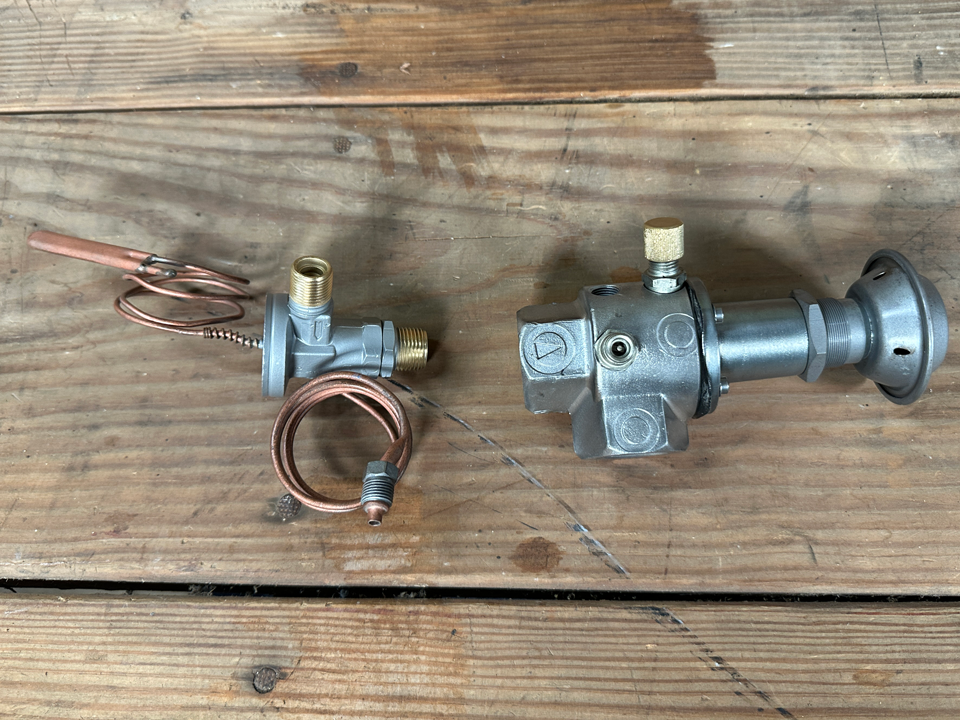
Below are the parts as returned from the Part Guy.
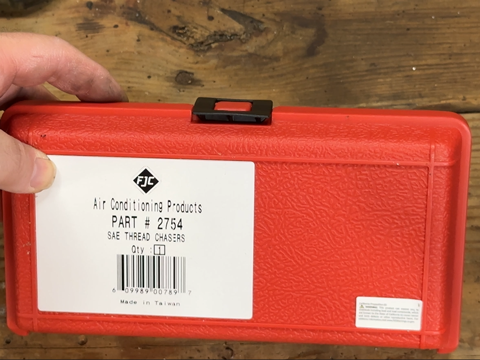
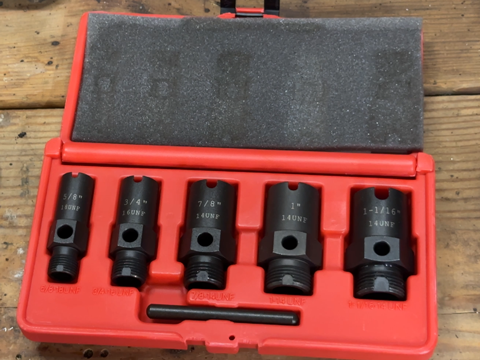
The next step was to see if I could repair the threads on the evaporator male brass fitting to save buying a $350 replacement in 2025 dollars. I found an $86 thread chaser kit came into existence from FJC, called their Standard Thread Chaser Set 2754. Using the 1 1/16 thread chaser, I was able to restore the fitting, below.
Once the fitting was fixed, the evaporator got the same flushing routine as the condenser, with the addition of making sure the oil bleed line was flushed as well.
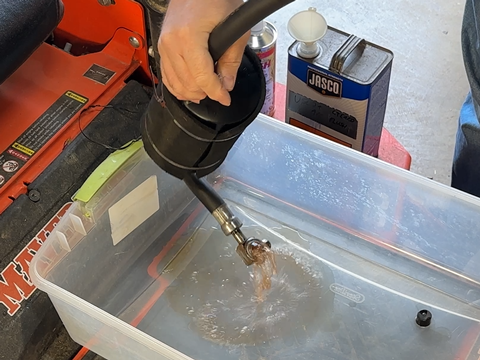
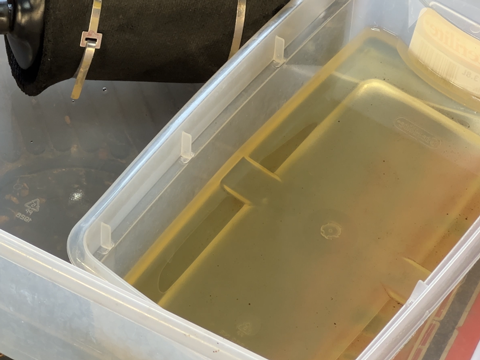
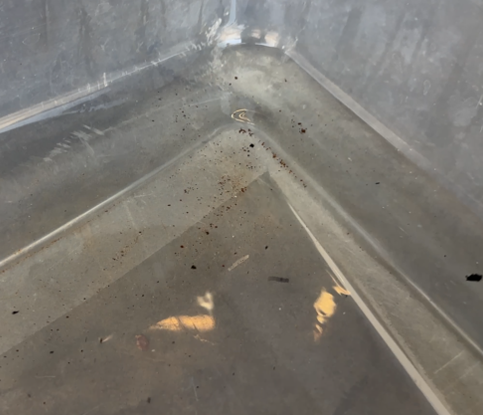
I tried to flush the muffler multiple times thinking I could solve the issue with money by using a ton of Super Flush. I had to come to the realization that because the inside of the muffler was uncoated steel, the muffler would just rust again after a flush. Fun fact, the only other non-aluminum parts in the A/C system are the cast iron block and heads of the A/6 compressor, and the steel tube in the A/C hose to the compressor. I think in 64 when A/C mufflers were first installed, the Freon/oil kept them clean, but once any moisture got in the system it was flash rust city in the muffler. Below, left, one of many attempts to flush. Below right, even after four flushes, I still got small black dots of rust out, shown toward the bottom of the container.
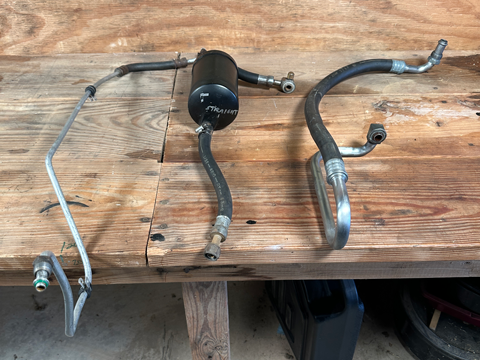
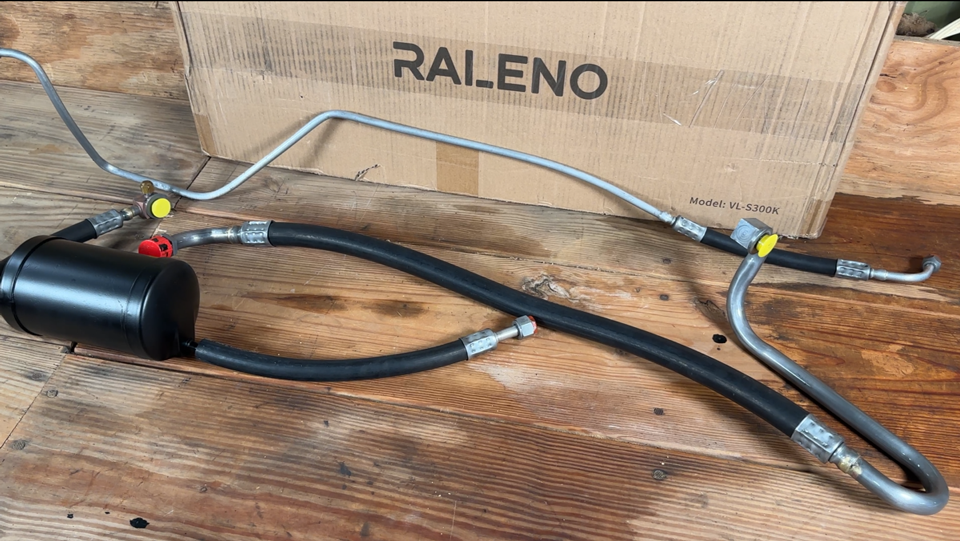
As of this writing, all the A/C lines have been removed and shipped to Old Air Products for rebuilding, including the line with the muffler. There is no supplier for Buick rebuild or newly manufactured A/C mufflers. It is not necessary to put an A/C muffler back into the system, but I'd like it to look as original as possible. I believe Old Air Products may have an Oldsmobile muffler that will likely look the part. Below, all the hose parts before being shipped out to them.
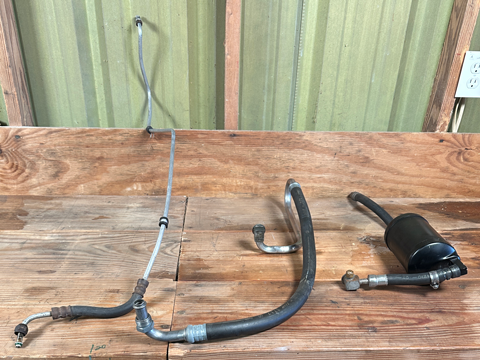
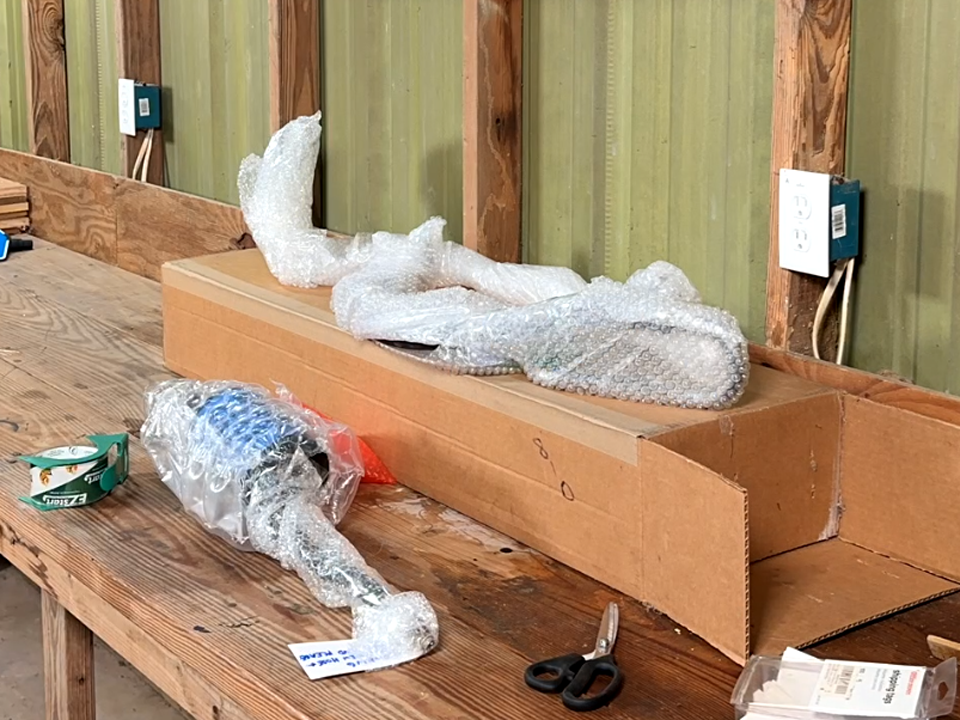
The hoses were returned and feature made in the USA Galaxy barrier hose. My original fittings were brazed onto new fitting ends and reused. An unexpected issue is even though we had talked about media blasting and clearcoat, the hoses came back painted black!
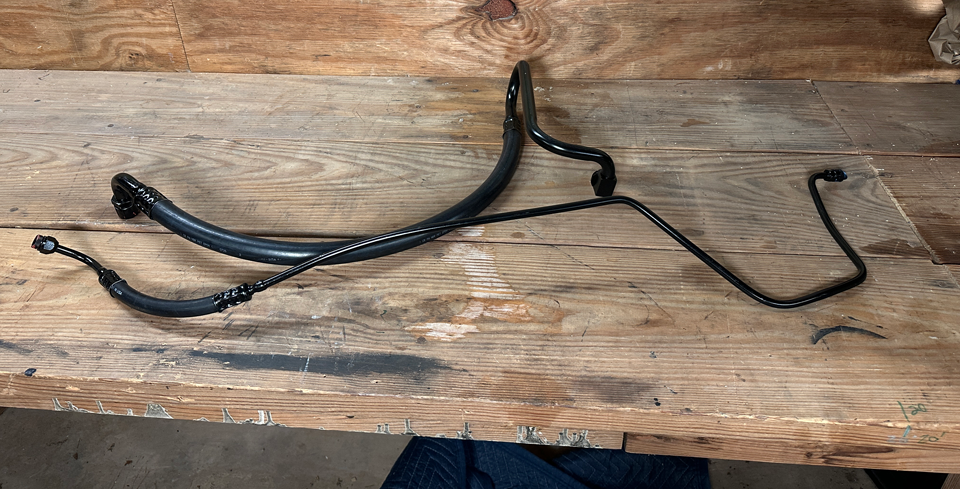
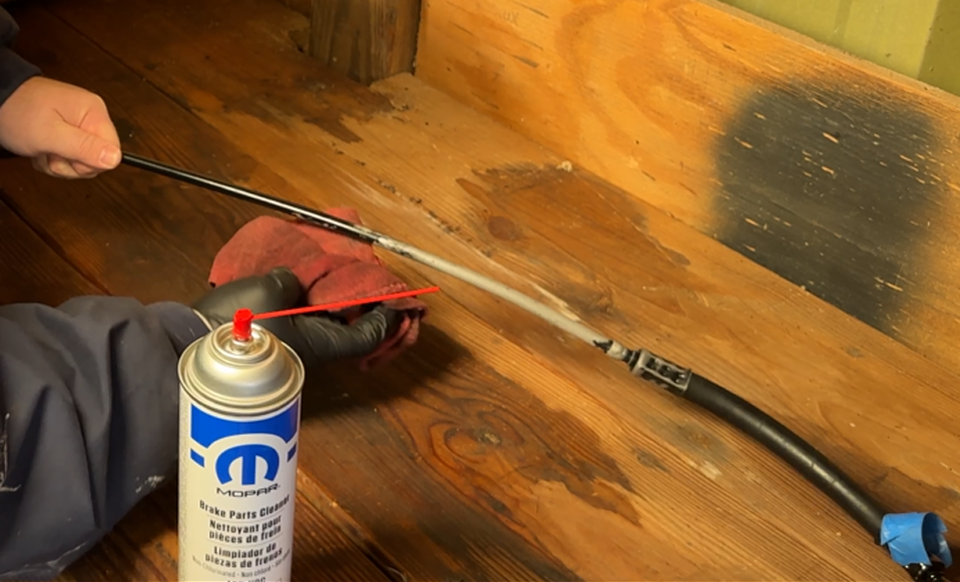
I reached out and they asked me to try brake cleaner. The brake cleaner got them clean, but it wasn’t fun doing that in 20 degree weather, and it saved the time shipping them back and forth.
I then paid to have my body shop clear coat the steel fittings and lines so they wouldn’t rust. While it is technically over-restoring, I’d rather have no corrosion and prolong the life of the car. Old Air Products was able to clean out my A/C muffler. I originally thought this would be an impossible task with the flash rusting that happens, but they had a larger than standard ultrasonic cleaner they were able to use.
At this point I had all the parts back and started the process to get the A/C back on the car. I decided to clean the condenser one last time before putting it on the car even though in previous flushes it had eventually come out clean. Surprise, more small particles! I repeated the process and continued to get un-inspiring results.
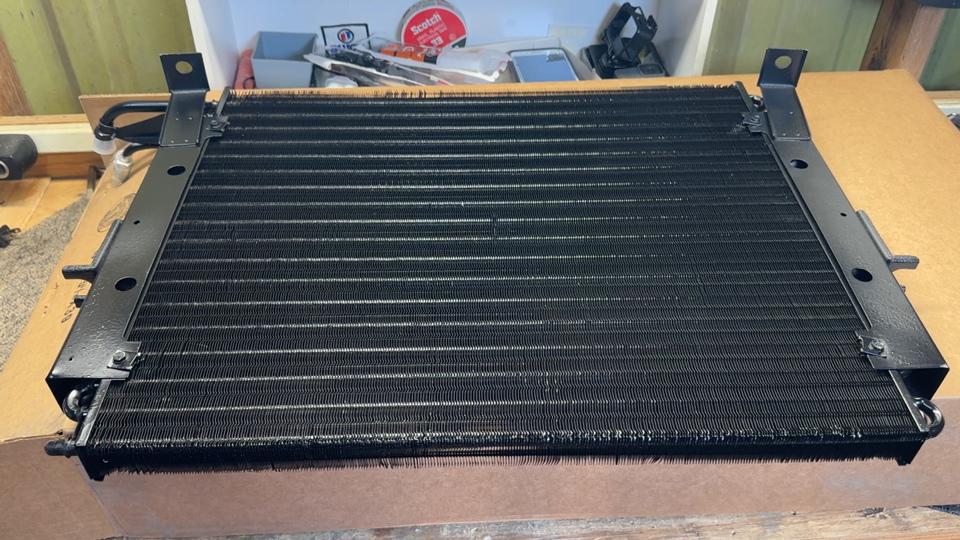
With all the money already spent, I decided to go ahead and replace the condenser. Looking online Auto AC solutions in Texas had one listed, but it looked very universal. I was able to send my old unit in and get a custom unit which re-used my brackets and came pre-painted. It was $425.
After the condenser fiasco, I decided to pull the evaporator and repeatedly flush it. I really didn’t want to go through the hassle of removing from the car, but I did. I came up with a Rube Goldberg contraption to shake the evaporator at all angles and put used, filtered A/C flush through it. Same story of the condenser, kept getting particles. On to replacement.
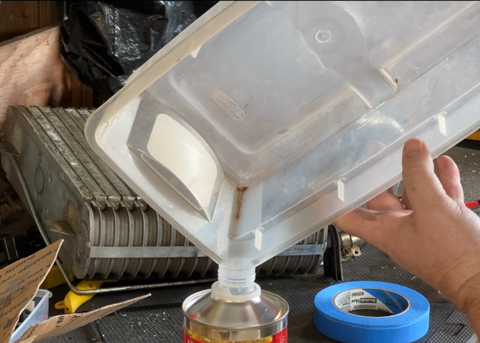
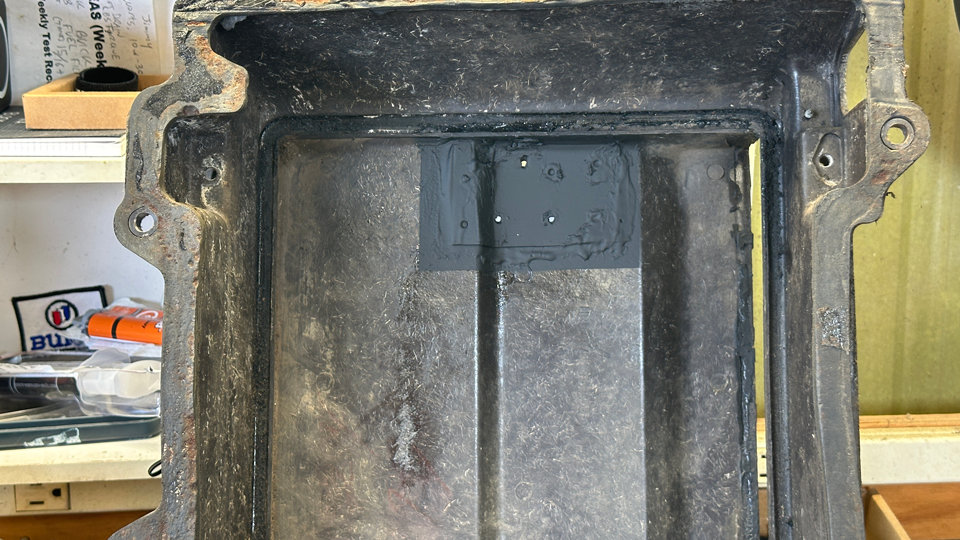
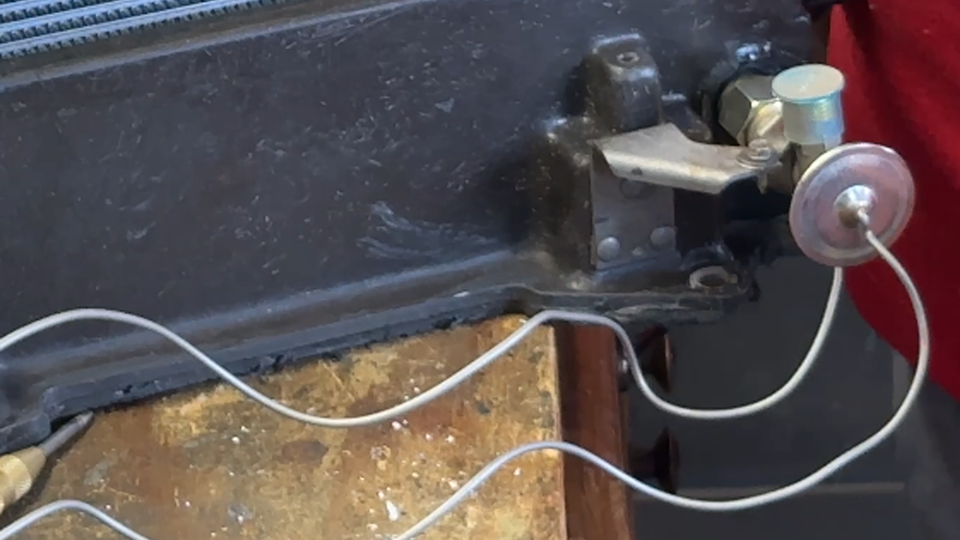
While I waited for the replacement to ship, I had time to do some aesthetic work to the fiberglass evaporator box. As the STV and assembly had pulled away from the box earlier, I had used gray JB Weld to correct which stuck out like a sore thumb. I carefully removed the STV bracket and chiseled away the epoxy. With the bracket removed, I made a reinforcement plate that wouldn’t be visible to aid in rigidity. I then roughed up the inside of the box where the bracket would mount, and drilled extra holes where adhesive would push through to key the bracket in. It was then painted black, below.
In 1964 Buick issued a bulletin showing an additional mount ostensibly for vibration, but I think they knew of the issue of the bracket pulling out.
Scan courtesy Jim Cannon.
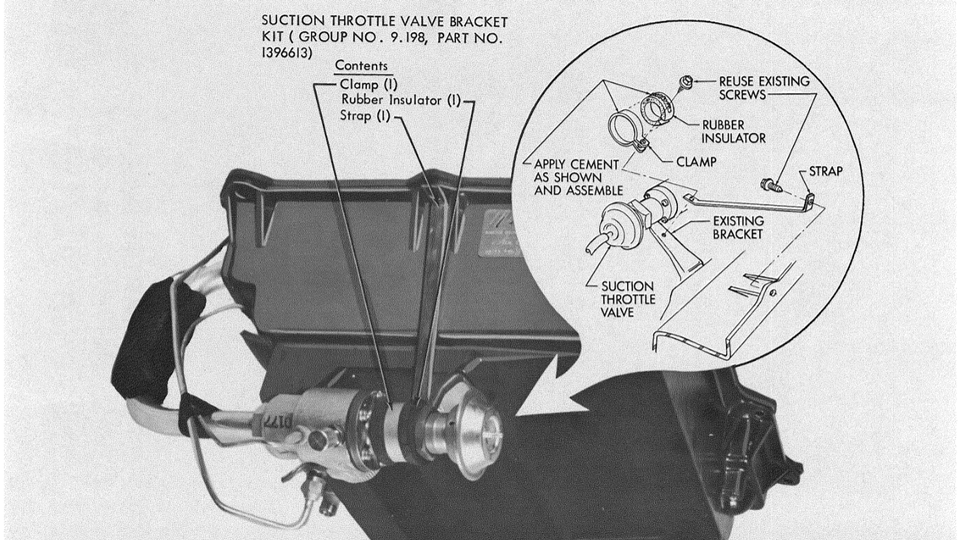
The STV mount was blind riveted through it. Below, the rubber gasket has been sealed where it was separated for evaporator replacement.
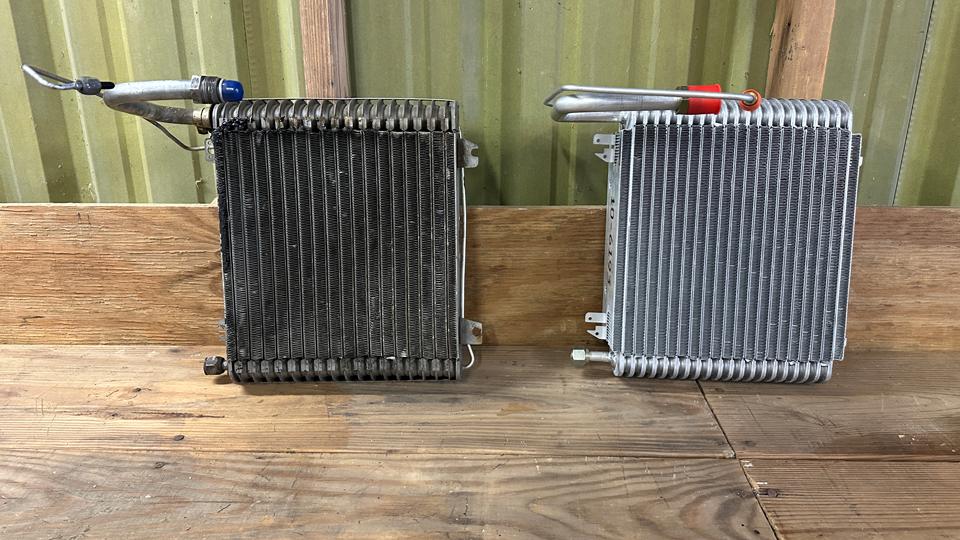
The new evaporator arrived, shown below at right. It was $410 after shipping and purchase of a service kit with O rings, foam seals, a drain seal, etc. Only the cork tape was used. The evaporator seems to be sold for both the big cars and the Skylark (but not special) so the brackets are more of a universal mount than original, being prongs, not screw holes.
I had to finesse the evaporator at a certain angle to hit all four screws, and add washers where none were needed before. The large aluminum line also needed adjustment to get it to line up to the STV mount. This evaporator introduced holes around the corners the other evaporator didn’t have, so they were filled with 3M Strip Calk.
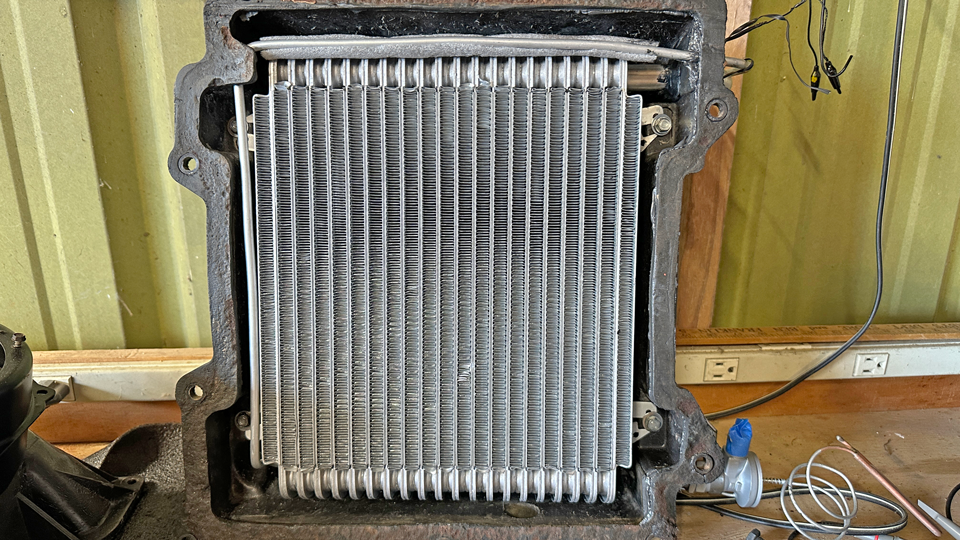
The first item to go back on the car was the evaporator, with the refurbished expansion valve already in place.
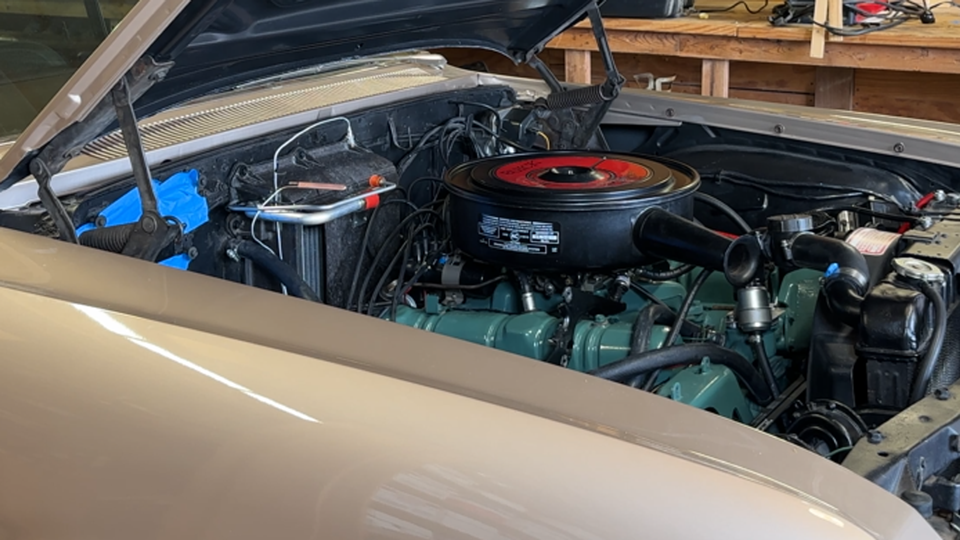
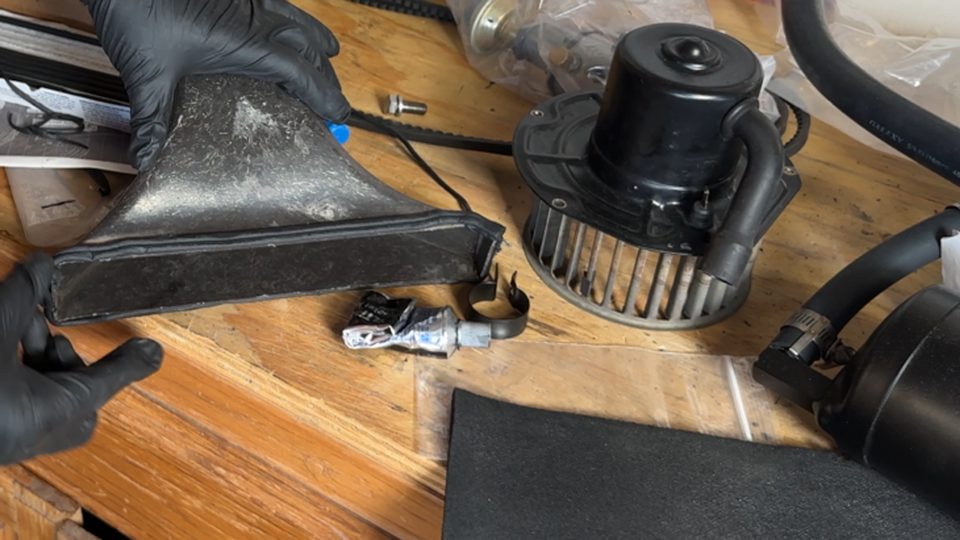
I added the blower motor housing, and then when putting the intermediate duct between the housings I used 3M Strip Calk to seal, instead of the Ultra Black RTV I had used 20 years ago, shown below. When disassembling the components to flush the evaporator, that RTV had gripped so well it did not let go, and I couldn’t get a knife in to separate on the backside, so I unknowingly ripped a piece of fiberglass off! Luckily I had original parts shown below and replaced.
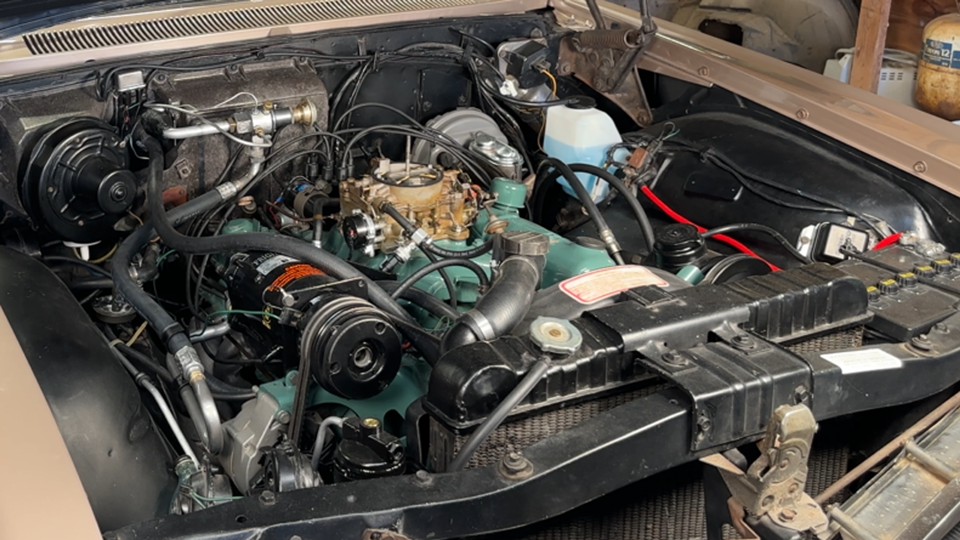
A/C hoses were added next along with the receiver dryer and compressor.
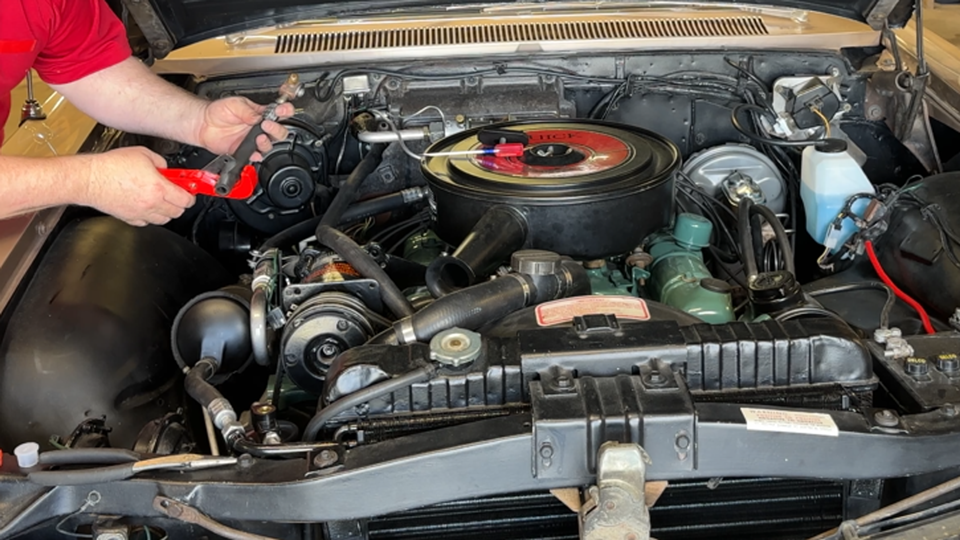
The Buick A/C muffler is installed next. The output hose was left a little long, so it was cut to the length I wanted which also corrected an issue where it used to rub against the fender.
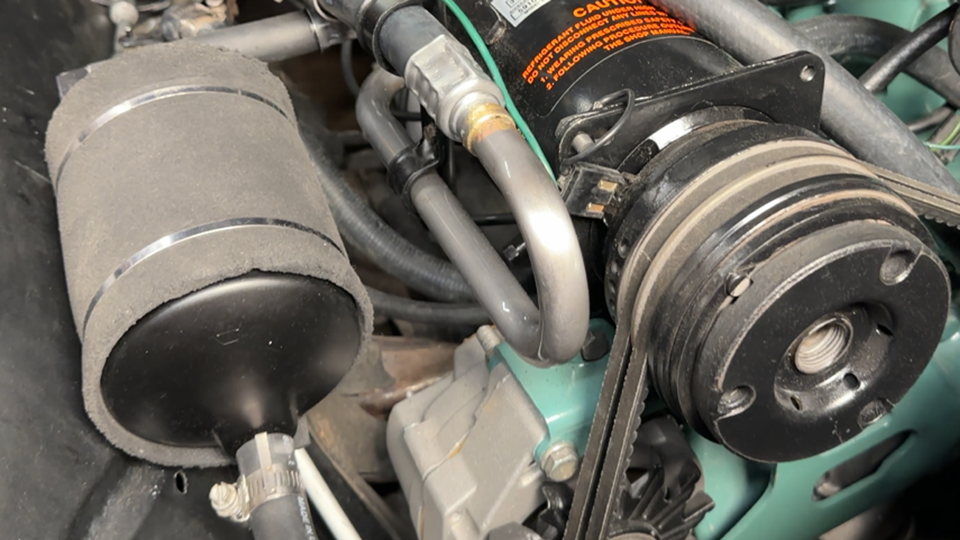
My original muffler clamps were rusted and pitted, so I opted to buy new old stock replacements. The brand was Ideal Hy-Gear which comes with the metal tab to insure spacing is correct.
With the A/C in place, I kept the system under vacuum for a full 24 hours. After that, I made sure the vacuum didn’t leak over another 24 hours. No issue.
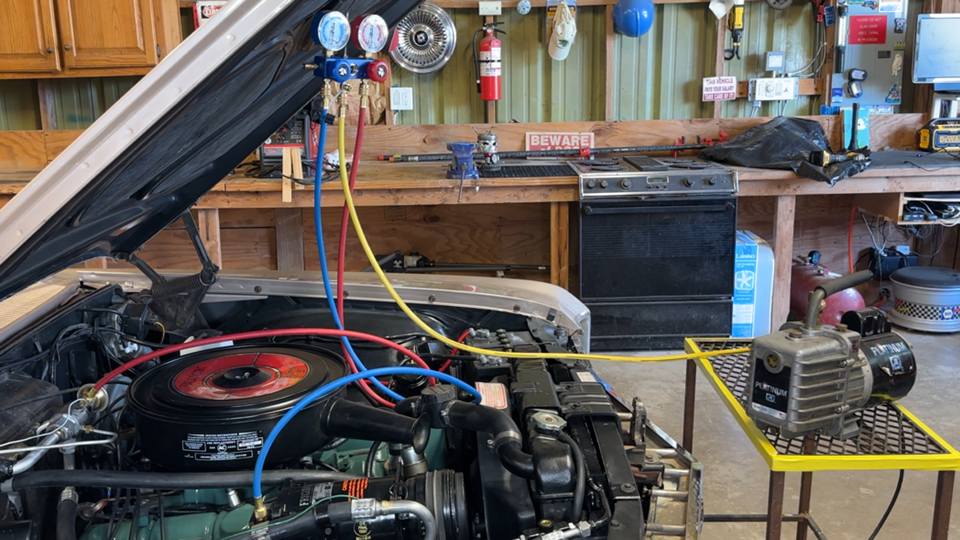
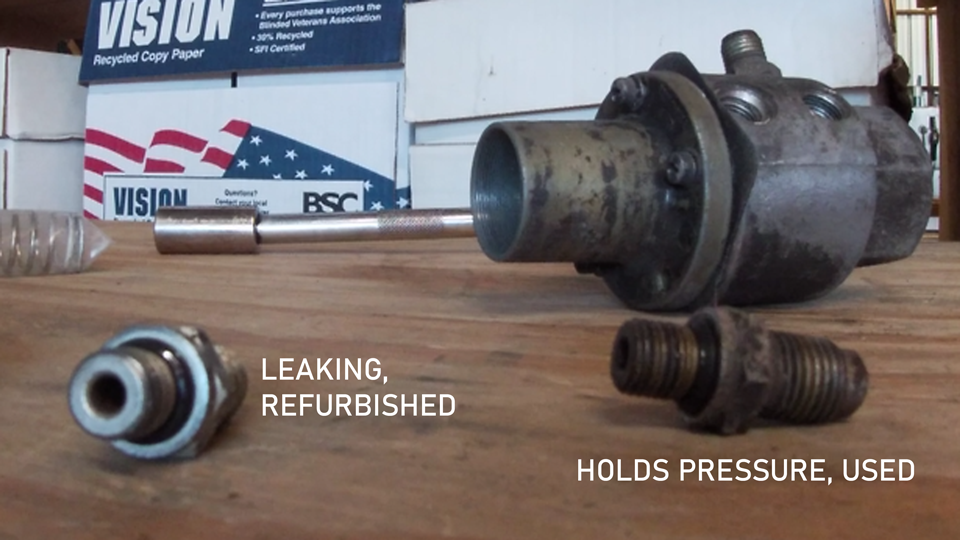
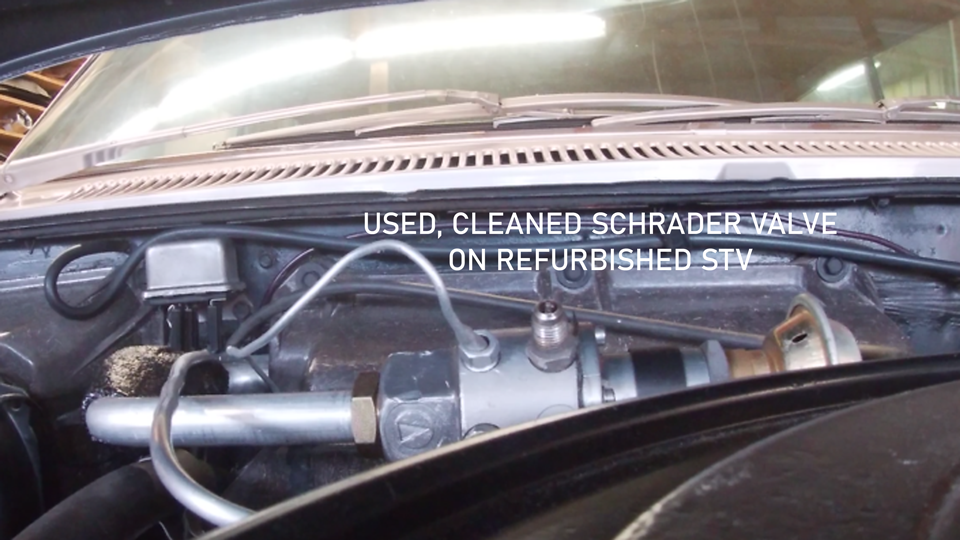
I then started removing the high side hose from the refurbished STV, and after the hose was long gone continued to hear the hiss of the vacuum being released through the Schrader valve. I transferred the Schrader valve from the damaged unit over, and re-vacuumed the system.
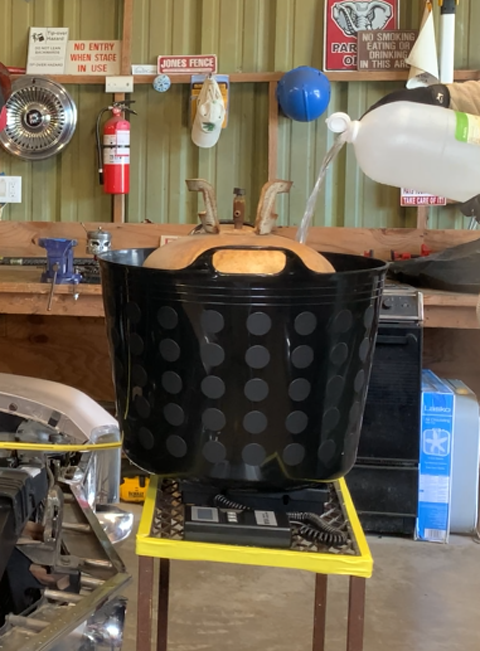
I finally got to the place where I was ready to charge the A/C. It calls for 4 pounds. I set a brand new muck bucket on my scale, added my 30 lb container of R-12, and then poured two gallons of 120 degree water in the bucket.
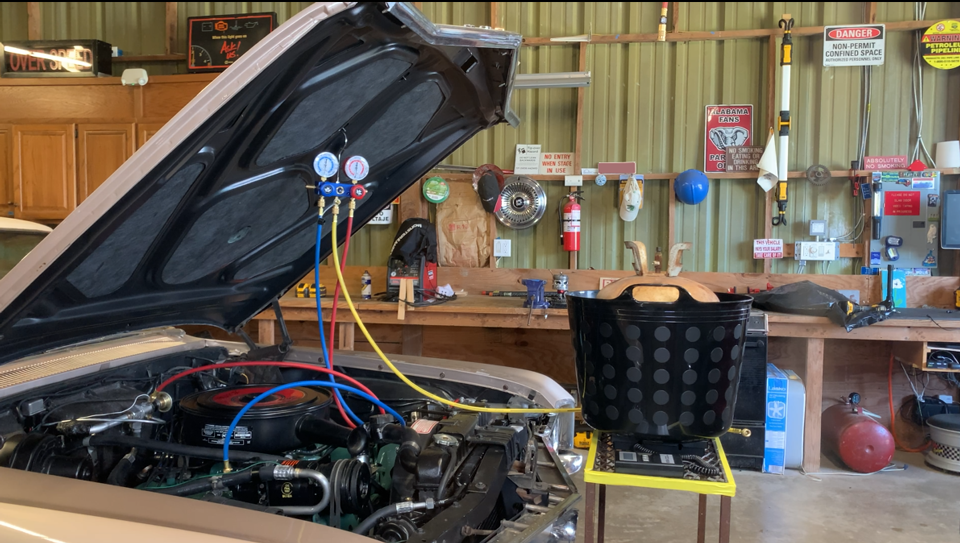
The Freon continued to fill the system, but about 45 minutes in it wasn't going as fast; the water had cooled. I siphoned out exactly 1 gallon of water, and replaced it with a gallon of 120 degree water. It took around 1 hour to charge 4 lbs. Picture is from original water fill.
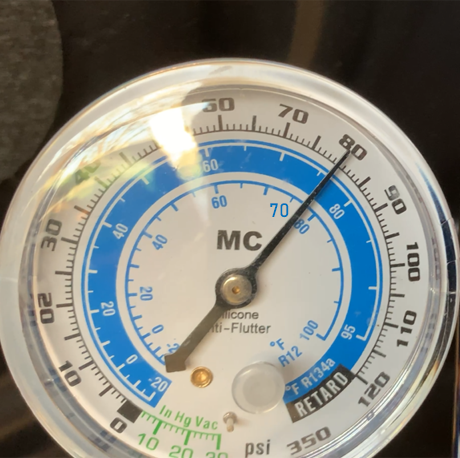
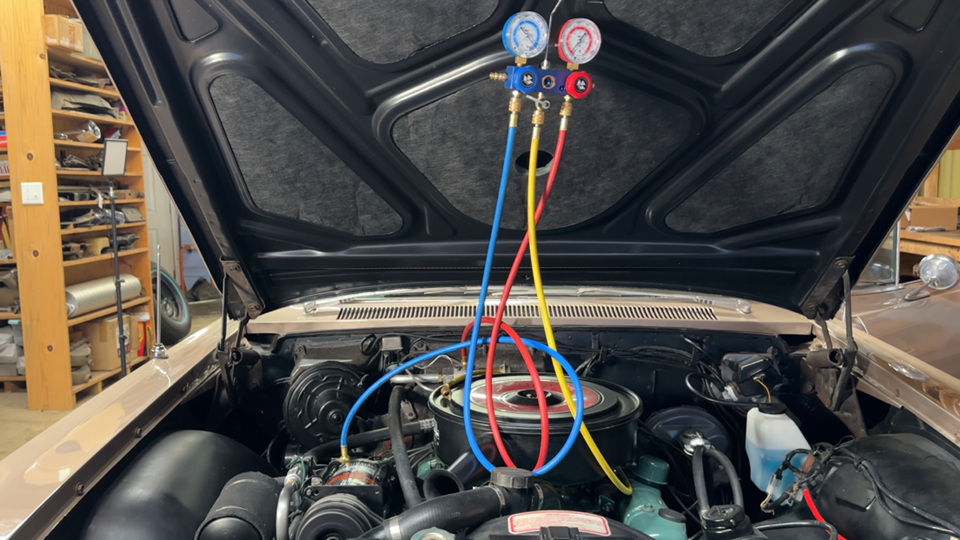
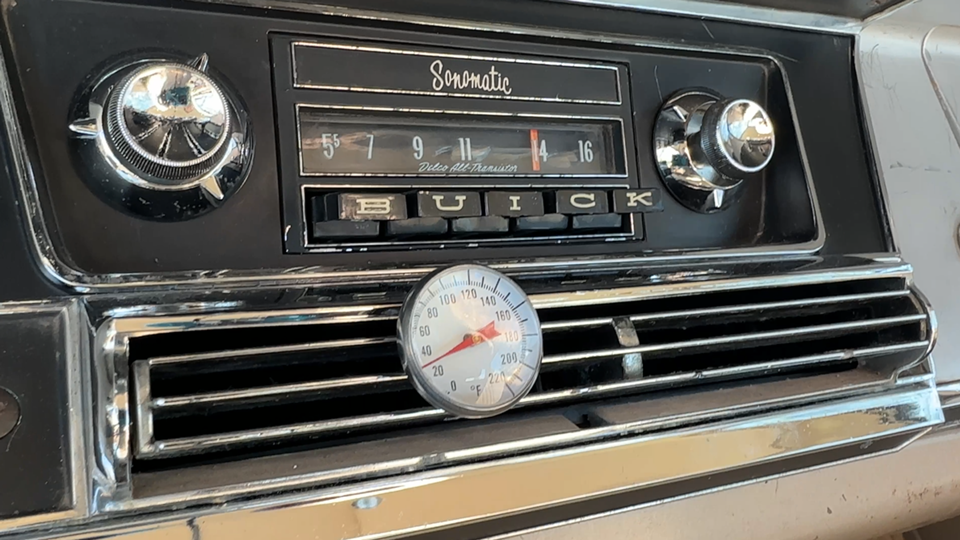
Excitedly after the charge was complete, I fired up the car, warmed it, and turned the AC to normal. Pressure looked good for a 73 degree day, below. I was so excited I had AC! The temperature gauge in the vent was rapidly dropping from 70 degrees toward under 60. And that lasted for 15 seconds.
The air got warm, and the suction side was frosting, shown below. I started troubleshooting, and the gauges showed when the AC was engaged, the low side spiked high. Research has led me to believe the refurbished expansion valve is stuck open, so on to borrowing an R-12 recovery machine, and putting on a parts store replacement!
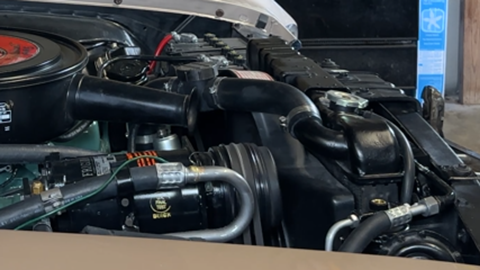
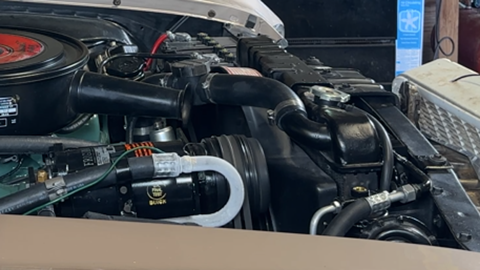
Low side spiking high, below.
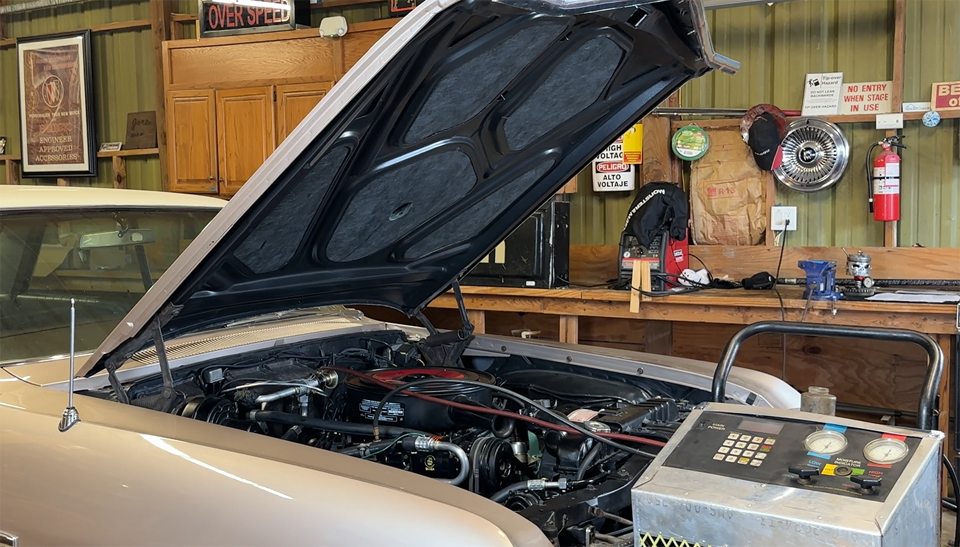
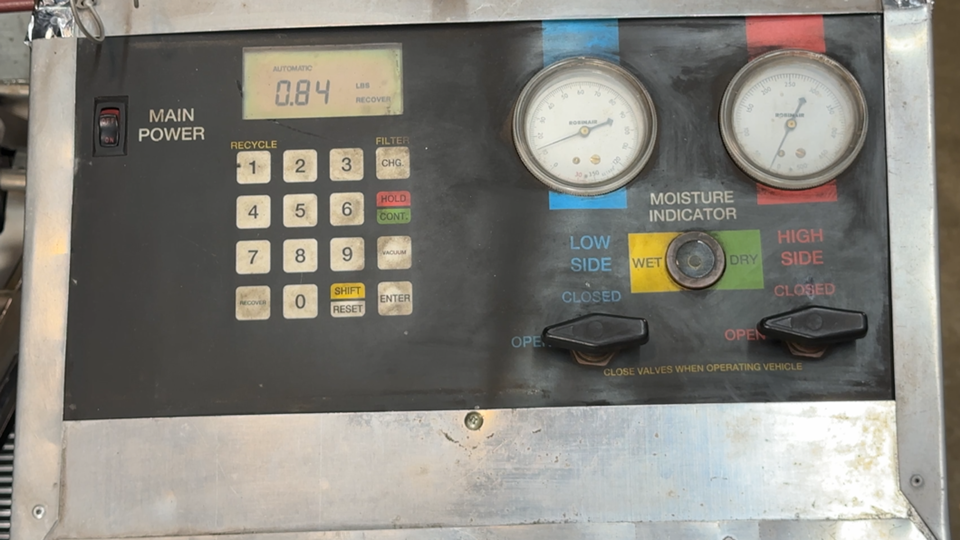
Step one was driving an hour away to borrow an A/C machine made a few years after I was born in the 80s. Recovered the 4 lbs of Freon 12 placed in the car less than a week prior.
After the 2025 car show season was over, I kicked off the A/C restoration of Sherman the 1964 Buick Wildcat. The A/C never worked since my dad purchased the car in the 70s, and it has been a long term goal to remedy that. Back in the 70s he removed the A/C to save weight as it was inoperative. 20 years ago I moved the A/C components off my parts car named Herman to Sherman but I knew it wasn't the time back then to get it working. Below, before and after the parts swap.
Fast forward to 2025 and the car is almost fully restored including body, paint, and interior. Time for the next project.
The first step and the longest lead time for the A/C to get rebuilt was the compressor. While the compressor is not original it is close enough for the date codes of the car. While a brand new Alma compressor would be around the same cost, I didn't want metric threads and fasteners on the car. I did a cosmetic restoration on the compressor in 2019, which was nothing more than painting it so it wouldn't look odd against the newly rebuilt and repainted engine. Below, the compressor before the cosmetic only restoration, after cosmetic restoration.
The compressor was rebuilt by a gentleman famous for rebuilding Corvette A6 compressors. Below is all the rust he found in the compressor upon disassembly, and then the after picture. The compressor looks 100% correct.
https://1964buick.com/resto_logs/Air_Conditioning/01Wildcat-AC-Before-1.png
The receiver dryer was the next to be removed because there was a long lead time for restoration. I had purchased a universal replacement at one time, but I didn't like how incorrect it looked. There are no dryers sold that look correct to this style. Old Air Products in Fort Worth was able to put new desiccant and rehab my dryer to new, including a new sight glass. Below, the original and universal, and the restored original.
The next step of the restoration was the removal and rehabilitation of the condenser. Many hours were spent straightening the aluminum fins. It was flushed four times with Four Seasons Super Flush solvent, shown below. The first flushes contained rust and rusty particles. It was flushed until clear. The side caps were removed, and the whole unit was cleaned and painted with Eastwood Radiator Paint for the proper look and to maintain proper airflow vs. regular thicker paint.
Removal and restoration of the STV was next. I would not have removed the STV had I not found rust in the condenser. I knew the STV had to come off for a proper evaporator flush. I had tried to remove the STV 20 years ago when I put a new seal in it, and couldn't get it to budge. Fast forward 20 years, and I had tools with exceptional leverage. Below was the setup I used.
As I removed the STV to evaporator fitting, it took some effort to give, and as I continued unscrewing it, there was abnormal resistance. Once I got the fitting out, it was evident what had happened. Either 61 years ago it was installed cross-threaded, or more than likely galvanic corrosion made the steel fitting and aluminum threads to become one. The very first threads on the male side were semi-obliterated, shown below at left, and this caused the flattening of all threads on the STV as it was removed. Note on the right picture the bottom threads as they should be, and the top threads that are flattened beyond repair.
The plan was to send off the STV to The Part Guy LLC to get a new seal in it and to refurbish the original expansion valve at the same time. I tried the forums first, but no one had an STV off a big car. Riviera STVs work backwards. There were none on eBay. With the threads trashed on the STV, I could even run one of the STV eliminator kits. I reached out to James at Best Offer Counts, and he had one just coming into stock off a parts car. Below, that STV and the expansion valve were sent to The Part Guy LLC for rebuilding.
Below are the parts as returned from the Part Guy.
The next step was to see if I could repair the threads on the evaporator male brass fitting to save buying a $350 replacement in 2025 dollars. I found an $86 thread chaser kit came into existence from FJC, called their Standard Thread Chaser Set 2754. Using the 1 1/16 thread chaser, I was able to restore the fitting, below.
Once the fitting was fixed, the evaporator got the same flushing routine as the condenser, with the addition of making sure the oil bleed line was flushed as well.
I tried to flush the muffler multiple times thinking I could solve the issue with money by using a ton of Super Flush. I had to come to the realization that because the inside of the muffler was uncoated steel, the muffler would just rust again after a flush. Fun fact, the only other non-aluminum parts in the A/C system are the cast iron block and heads of the A/6 compressor, and the steel tube in the A/C hose to the compressor. I think in 64 when A/C mufflers were first installed, the Freon/oil kept them clean, but once any moisture got in the system it was flash rust city in the muffler. Below, left, one of many attempts to flush. Below right, even after four flushes, I still got small black dots of rust out, shown toward the bottom of the container.
As of this writing, all the A/C lines have been removed and shipped to Old Air Products for rebuilding, including the line with the muffler. There is no supplier for Buick rebuild or newly manufactured A/C mufflers. It is not necessary to put an A/C muffler back into the system, but I'd like it to look as original as possible. I believe Old Air Products may have an Oldsmobile muffler that will likely look the part. Below, all the hose parts before being shipped out to them.
The hoses were returned and feature made in the USA Galaxy barrier hose. My original fittings were brazed onto new fitting ends and reused. An unexpected issue is even though we had talked about media blasting and clearcoat, the hoses came back painted black!
I reached out and they asked me to try brake cleaner. The brake cleaner got them clean, but it wasn’t fun doing that in 20 degree weather, and it saved the time shipping them back and forth.
I then paid to have my body shop clear coat the steel fittings and lines so they wouldn’t rust. While it is technically over-restoring, I’d rather have no corrosion and prolong the life of the car. Old Air Products was able to clean out my A/C muffler. I originally thought this would be an impossible task with the flash rusting that happens, but they had a larger than standard ultrasonic cleaner they were able to use.
At this point I had all the parts back and started the process to get the A/C back on the car. I decided to clean the condenser one last time before putting it on the car even though in previous flushes it had eventually come out clean. Surprise, more small particles! I repeated the process and continued to get un-inspiring results.
With all the money already spent, I decided to go ahead and replace the condenser. Looking online Auto AC solutions in Texas had one listed, but it looked very universal. I was able to send my old unit in and get a custom unit which re-used my brackets and came pre-painted. It was $425.
After the condenser fiasco, I decided to pull the evaporator and repeatedly flush it. I really didn’t want to go through the hassle of removing from the car, but I did. I came up with a Rube Goldberg contraption to shake the evaporator at all angles and put used, filtered A/C flush through it. Same story of the condenser, kept getting particles. On to replacement.
While I waited for the replacement to ship, I had time to do some aesthetic work to the fiberglass evaporator box. As the STV and assembly had pulled away from the box earlier, I had used gray JB Weld to correct which stuck out like a sore thumb. I carefully removed the STV bracket and chiseled away the epoxy. With the bracket removed, I made a reinforcement plate that wouldn’t be visible to aid in rigidity. I then roughed up the inside of the box where the bracket would mount, and drilled extra holes where adhesive would push through to key the bracket in. It was then painted black, below.
In 1964 Buick issued a bulletin showing an additional mount ostensibly for vibration, but I think they knew of the issue of the bracket pulling out.
Scan courtesy Jim Cannon.
The STV mount was blind riveted through it. Below, the rubber gasket has been sealed where it was separated for evaporator replacement.
The new evaporator arrived, shown below at right. It was $410 after shipping and purchase of a service kit with O rings, foam seals, a drain seal, etc. Only the cork tape was used. The evaporator seems to be sold for both the big cars and the Skylark (but not special) so the brackets are more of a universal mount than original, being prongs, not screw holes.
I had to finesse the evaporator at a certain angle to hit all four screws, and add washers where none were needed before. The large aluminum line also needed adjustment to get it to line up to the STV mount. This evaporator introduced holes around the corners the other evaporator didn’t have, so they were filled with 3M Strip Calk.
The first item to go back on the car was the evaporator, with the refurbished expansion valve already in place.
I added the blower motor housing, and then when putting the intermediate duct between the housings I used 3M Strip Calk to seal, instead of the Ultra Black RTV I had used 20 years ago, shown below. When disassembling the components to flush the evaporator, that RTV had gripped so well it did not let go, and I couldn’t get a knife in to separate on the backside, so I unknowingly ripped a piece of fiberglass off! Luckily I had original parts shown below and replaced.
A/C hoses were added next along with the receiver dryer and compressor.
The Buick A/C muffler is installed next. The output hose was left a little long, so it was cut to the length I wanted which also corrected an issue where it used to rub against the fender.
My original muffler clamps were rusted and pitted, so I opted to buy new old stock replacements. The brand was Ideal Hy-Gear which comes with the metal tab to insure spacing is correct.
With the A/C in place, I kept the system under vacuum for a full 24 hours. After that, I made sure the vacuum didn’t leak over another 24 hours. No issue.
I then started removing the high side hose from the refurbished STV, and after the hose was long gone continued to hear the hiss of the vacuum being released through the Schrader valve. I transferred the Schrader valve from the damaged unit over, and re-vacuumed the system.
I finally got to the place where I was ready to charge the A/C. It calls for 4 pounds. I set a brand new muck bucket on my scale, added my 30 lb container of R-12, and then poured two gallons of 120 degree water in the bucket.
The Freon continued to fill the system, but about 45 minutes in it wasn't going as fast; the water had cooled. I siphoned out exactly 1 gallon of water, and replaced it with a gallon of 120 degree water. It took around 1 hour to charge 4 lbs. Picture is from original water fill.
Excitedly after the charge was complete, I fired up the car, warmed it, and turned the AC to normal. Pressure looked good for a 73 degree day, below. I was so excited I had AC! The temperature gauge in the vent was rapidly dropping from 70 degrees toward under 60. And that lasted for 15 seconds.
The air got warm, and the suction side was frosting, shown below. I started troubleshooting, and the gauges showed when the AC was engaged, the low side spiked high. Research has led me to believe the refurbished expansion valve is stuck open, so on to borrowing an R-12 recovery machine, and putting on a parts store replacement!
Low side spiking high, below.
Step one was driving an hour away to borrow an A/C machine made a few years after I was born in the 80s. Recovered the 4 lbs of Freon 12 placed in the car less than a week prior.
Removed the old expansion valve, and it turns out the equalizer line had cracked off. With that line open, it tells the valve to stay wide open, which was causing my freezing.
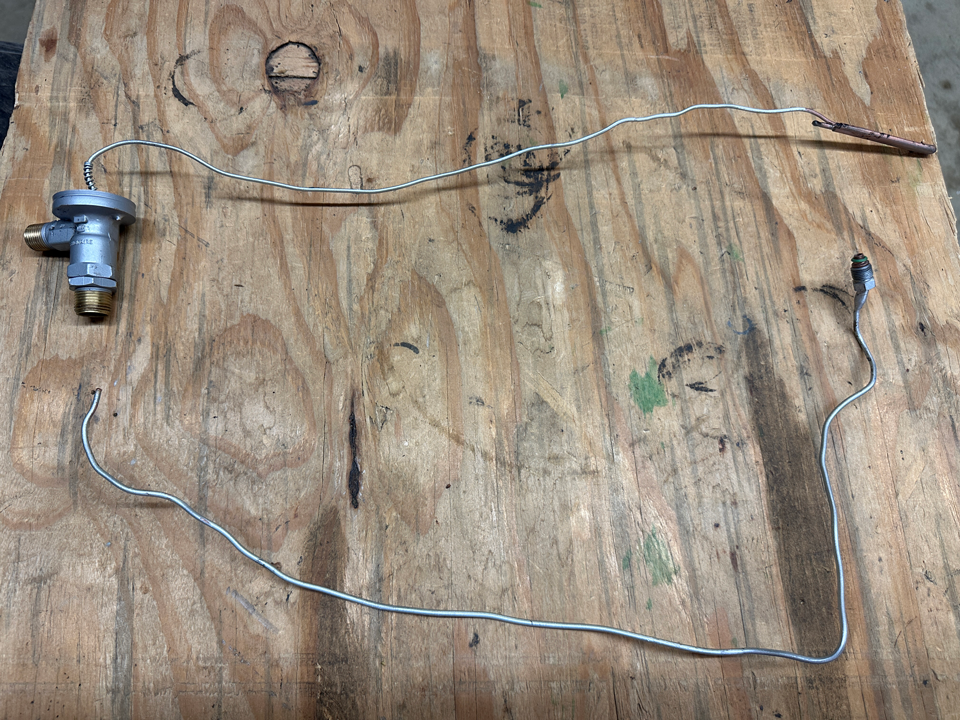
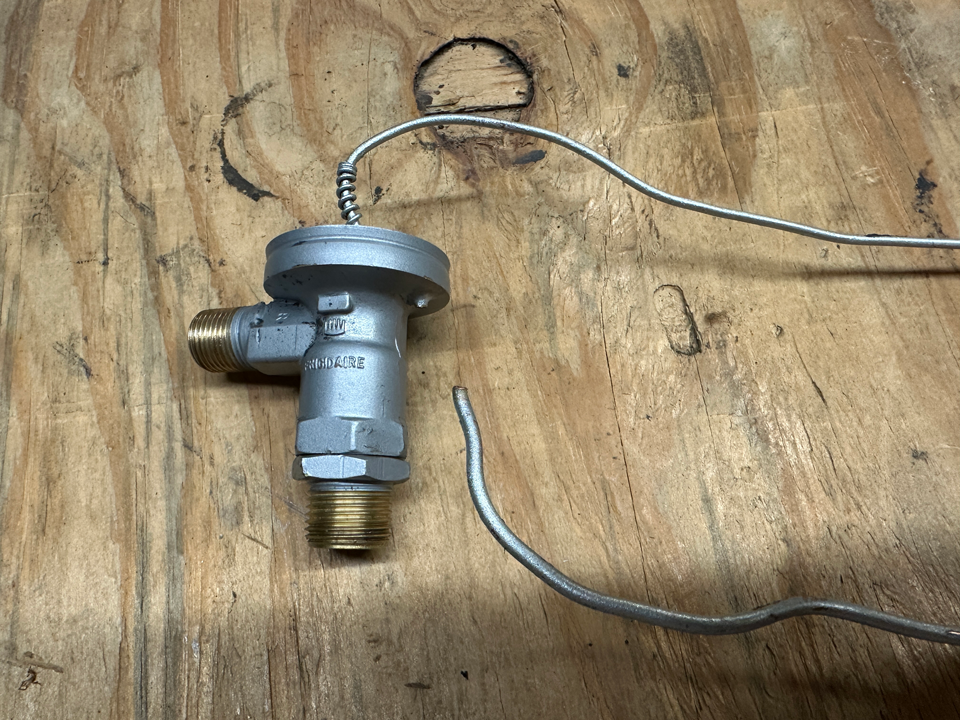
New expansion valve from Advance Auto. On the website, it stated it was for R12 or R134a, however stamped right into the top it says "134a." It's a 4 Seasons T38622 and when purchased through Advance, has a lifetime warranty.
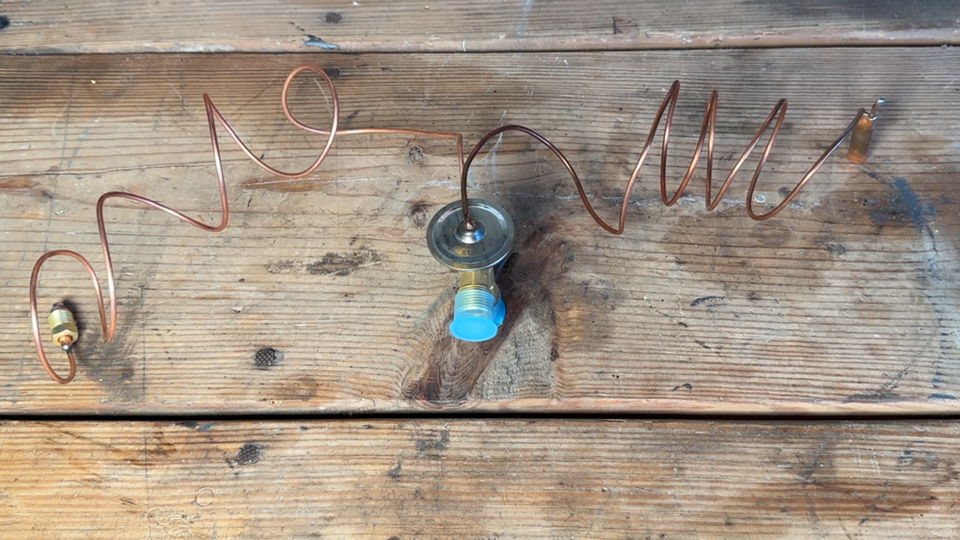
Expansion valve converted into a more OEM appearing valve by a coat of Eastwood Detail Gray paint.
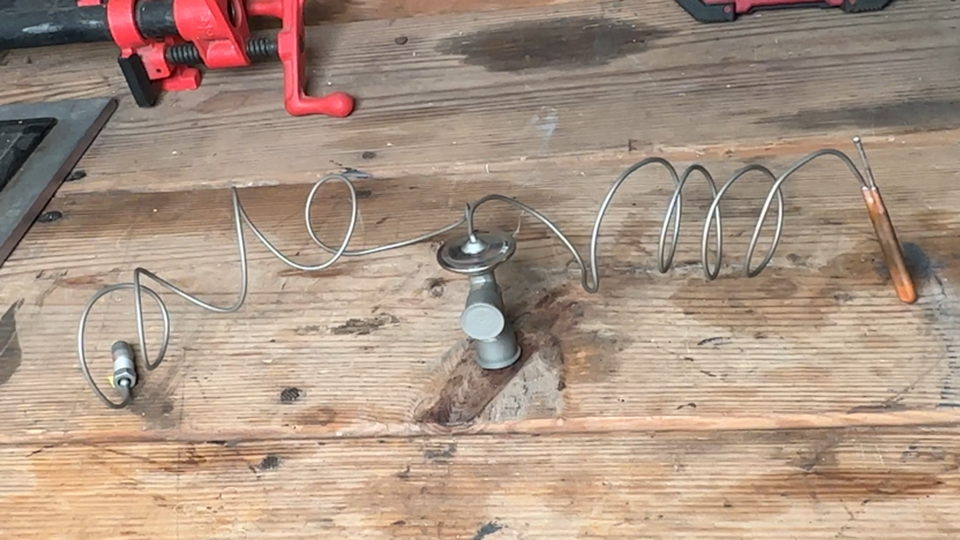
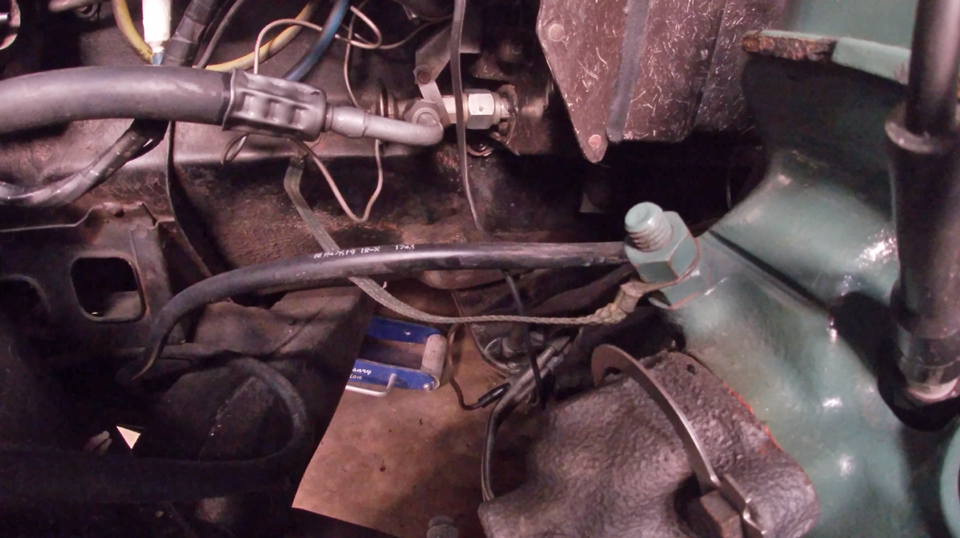
New expansion valve installed. The neck on the new valve is shorter, so the band that held it is at an angle.
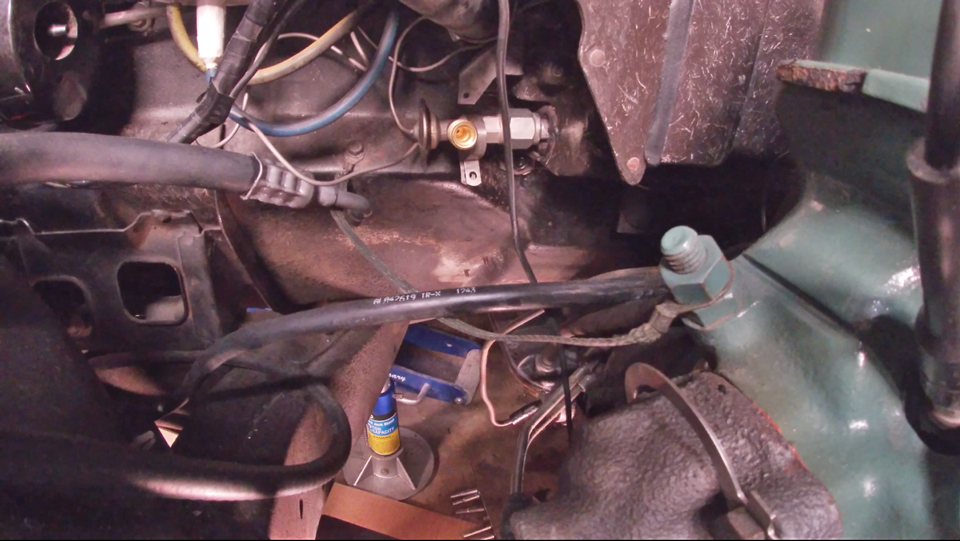
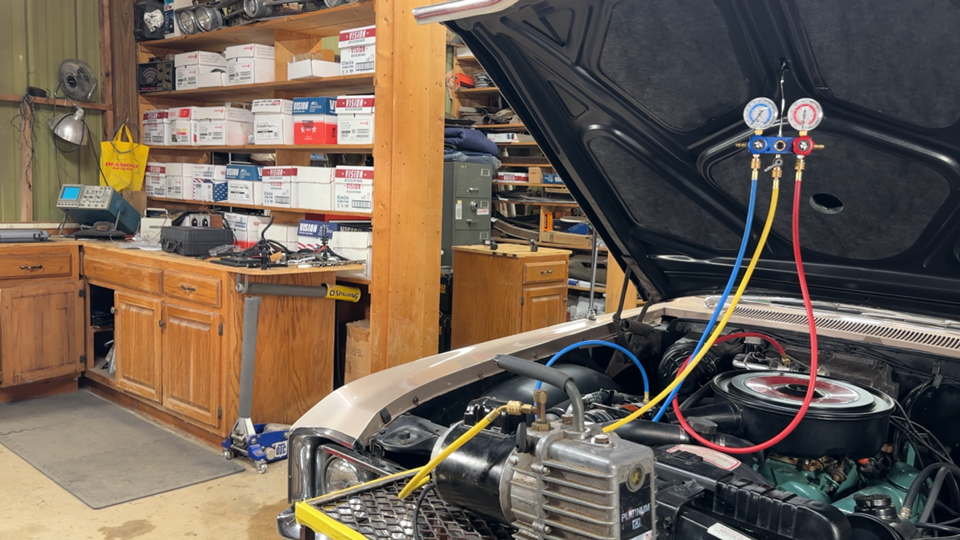
Another round of vacuuming to make sure zero moisture.
Success for 45 minutes, then the compressor locked up! I got the refrigerant back in the car with the new expansion valve, and the car had Air Conditioning for the first time in the 50+ years my family had owned this used car!
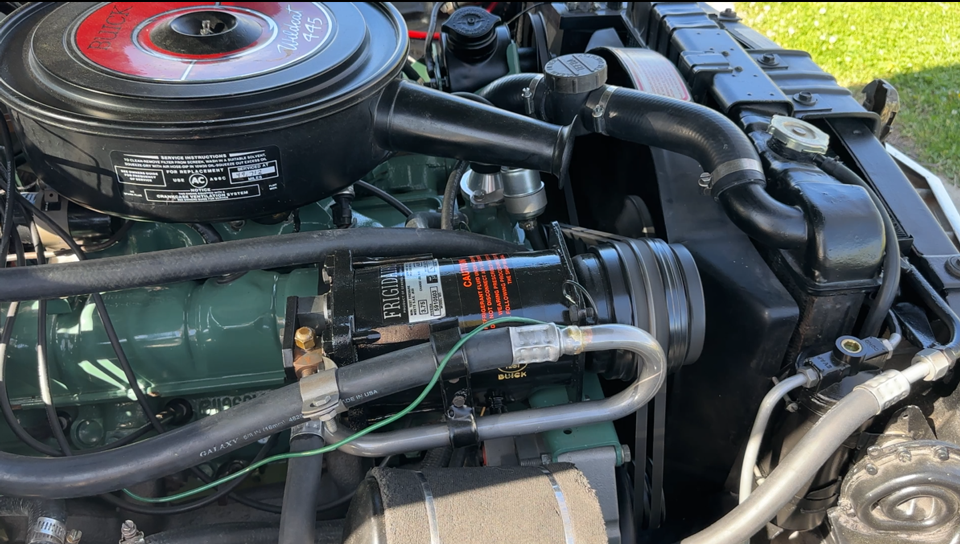
All systems were a go, so I took the car out for a drive. I've got a six mile loop I take, and with the AC on, at mile 5 out of 6, the A/C compressor started to chatter. I took a video of it and sent it to the gentlemen that rebuild my compressor, and he said he believed the clutch was starting to slip. Below, the car outside for the first time in 6 months with a working Air Conditioner!
With the comment about the clutch, I exhausted all the searches for a NOS double clutch, and it ended up I just ordered a rebuilt compressor mail order with the rebuilt clutch included to have one. While I waited for it get here, I did research to the chatter. One of the things that came up was low oil, and John's post above had me re-read the compressor rebuilders e-mail when I asked him specifically if I needed to add oil to the compressor.
Just double checking, but the oil in the compressor is good for R-12, and it is as full as it needs to be?
"Yes, comp has 6 oz oil in it and all oil and seals are compatible wit R-12 and R-134. Do not add system oil to comp, oil is compatible with all other oils."
I didn't catch what he was putting down. The system takes 10.5 oz of oil, and I had been running it on 6! Since the system had four pounds of DuPont R12 Freon back in it, I purchased the screw top oil inserter and cranked the A/C back on. I added the oil over 4 compressor cycles, and the compressor never squealed. The GM manual says the compressor will run with as low as 2 oz of oil in it, so I wiped my brow avoiding a catastrophe.
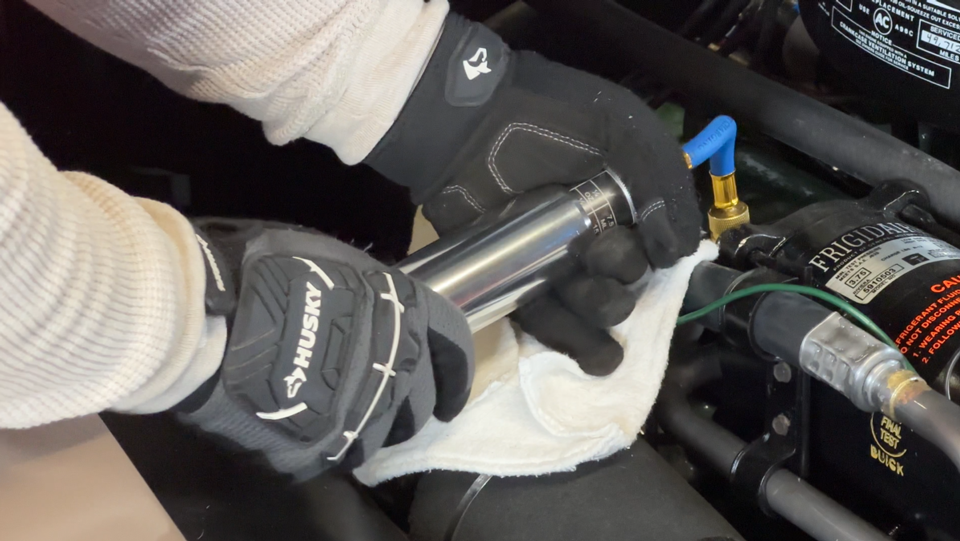
Since everything was working fine and I knew I had the proper oil level, I told myself let me do a final in-workshop test. I decided I would run the Air Conditioning 15 minutes and if everything was good, I would take it on a drive. Everything was great at 5 minutes, at 10 minutes.... At 12 minutes I hear an odd chatter and the clutch isn't turning anymore! I turn the A/C off, then turn the car off. Compressor is hot, so I let it cool down. When I come back to it, I hear a faint hiss from the front. I'm dumping Freon out the front and I can't turn the compressor. Hook up A/C machine to recover, and by that time pressure is below 25 pounds, it won't recover.
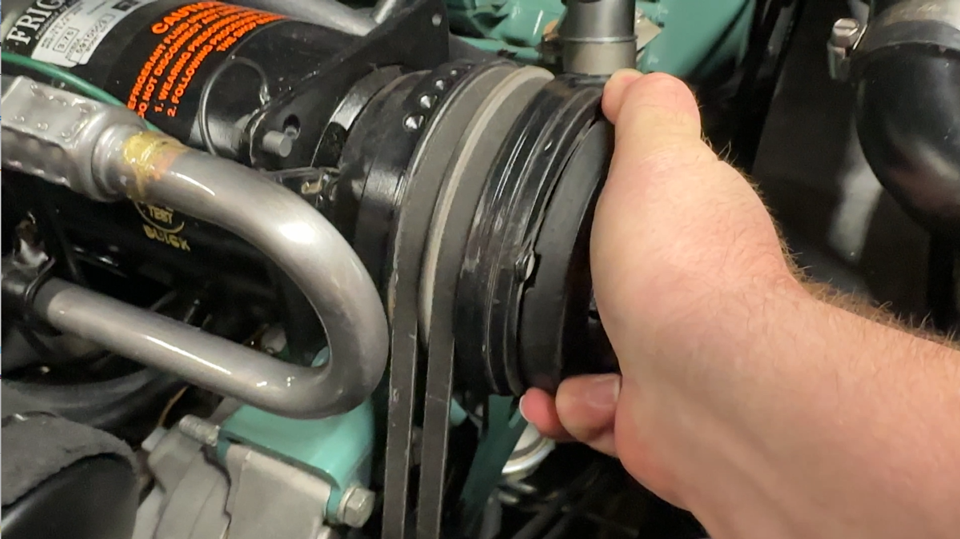
Now awaiting that rebuilt compressor I originally bought to have the clutch and interested what I find when I open the system.
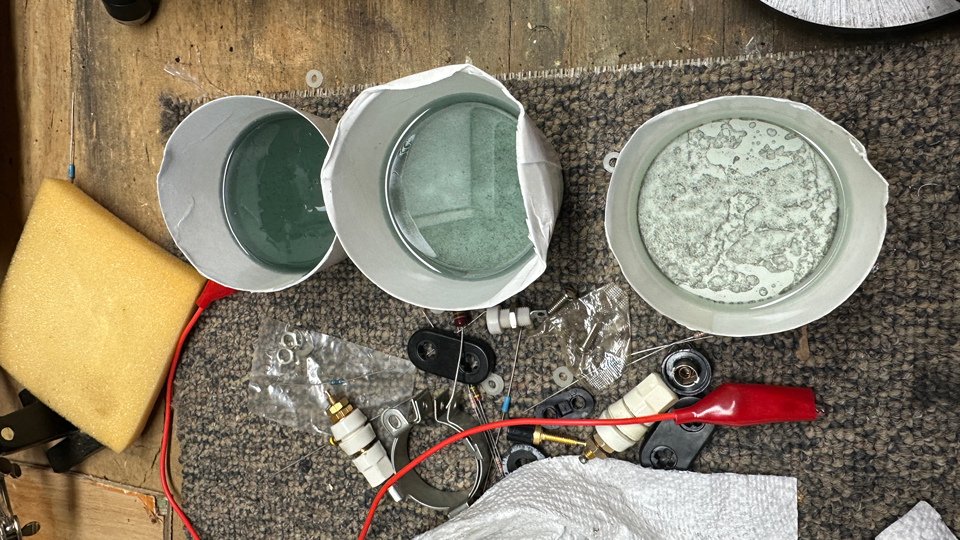
The rebuilt compressor came in, and the exterior box had a hole in it. It looked fine, so I started by changing the oil, and it took 6 oil changes to run clean (3 shown).
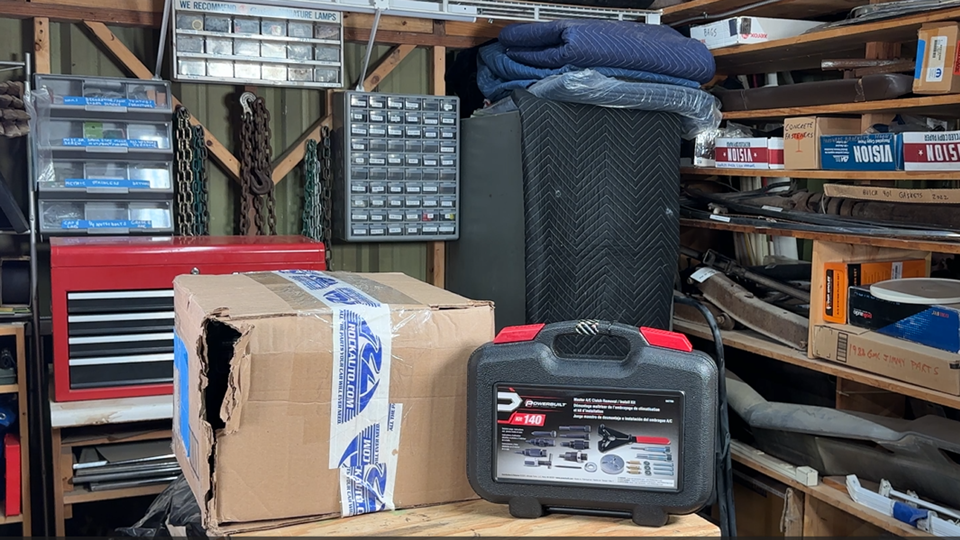
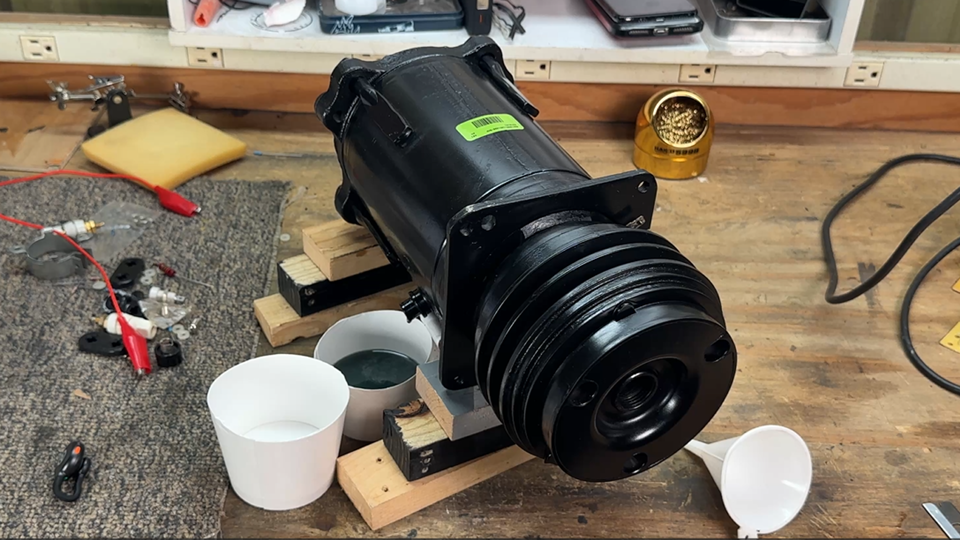
When I got it primed to remove the clutch to change the orientation of the electromagnet by attempting to measure the clutch air gap, I found out the compressor clutch was always engaged as it had likely been smashed in. Off it went back to RockAuto's distributor.
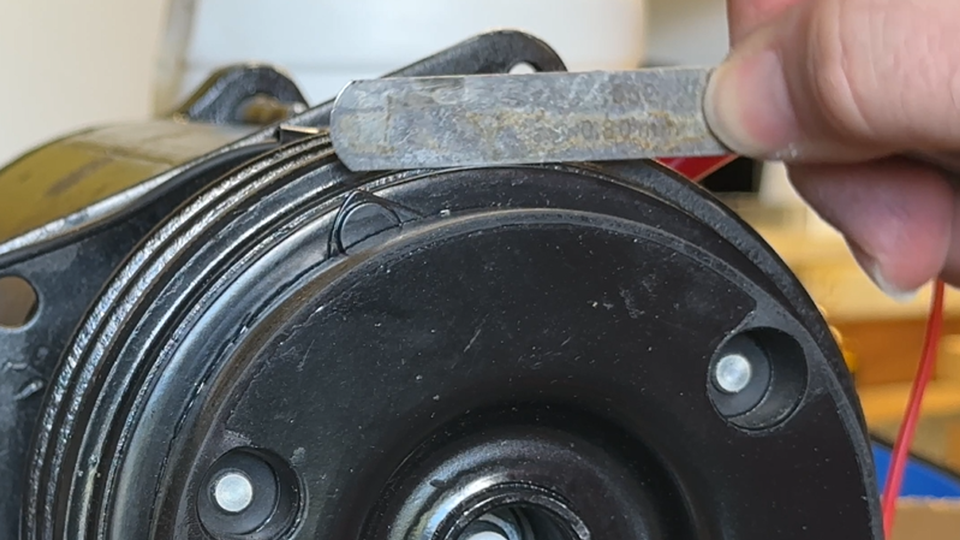
The replacement came with similar shipping damage, but it passed the clutch air gap check, so I moved forward getting it setup.
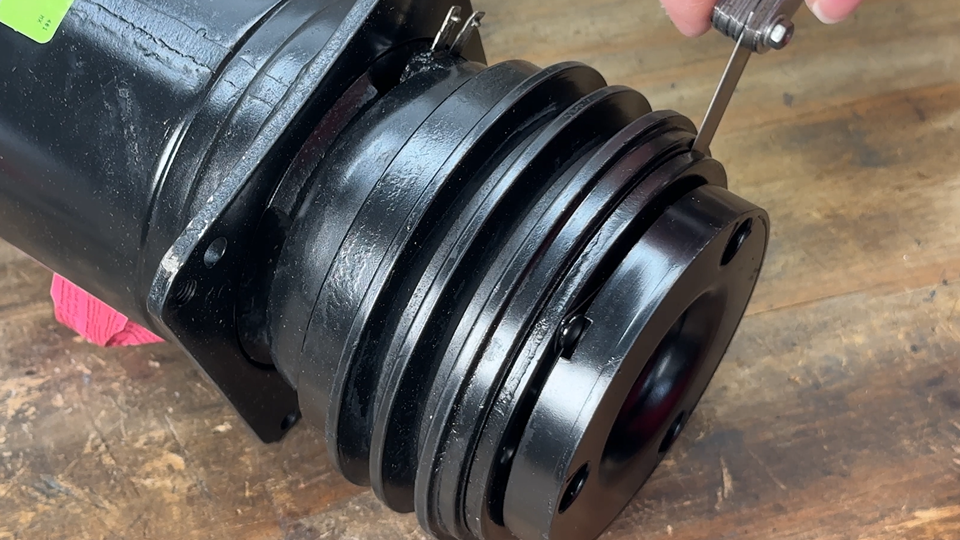
I re-clocked the electromagnet by borrowing a Loaner Tool AC Clutch removal kit from the auto parts store, and purchasing a pulley removal kit and Snap Ring pliers from Harbor Freight. A special thanks to https://www.eldorado-seville.com/files/a6compressorclutchbearing.php for showing how to remove the pulley and clutch. To get the pulley back on the compressor, I cooled the compressor in the fridge and heated the pulley in the oven. They slipped together easily.
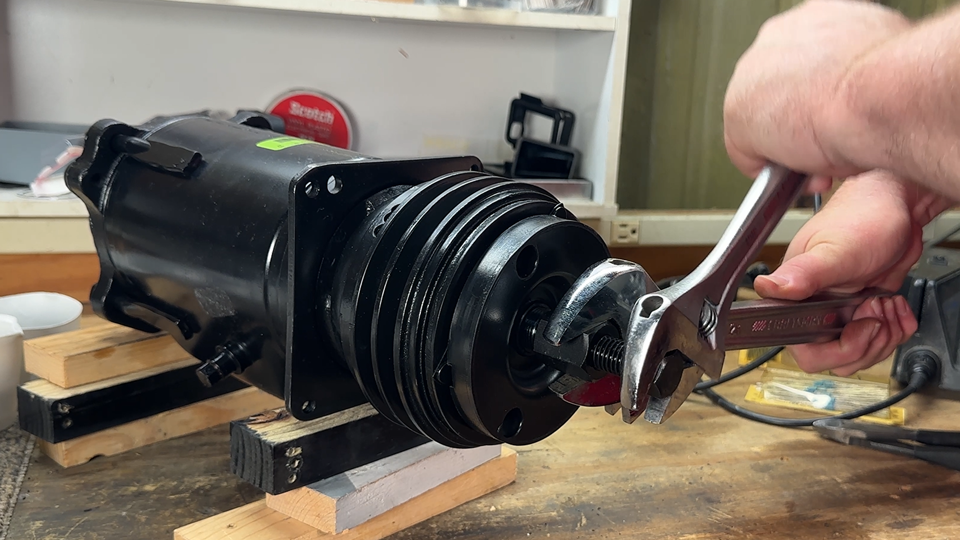
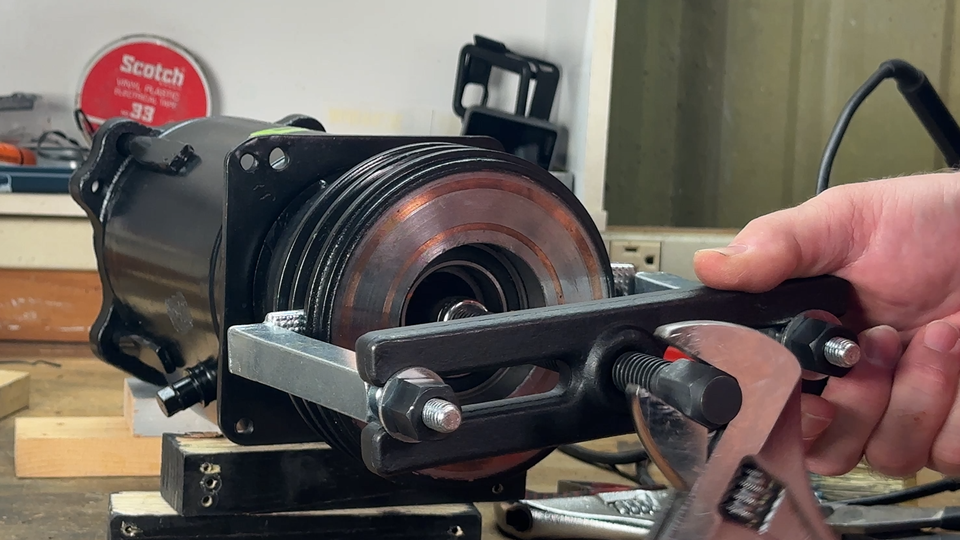
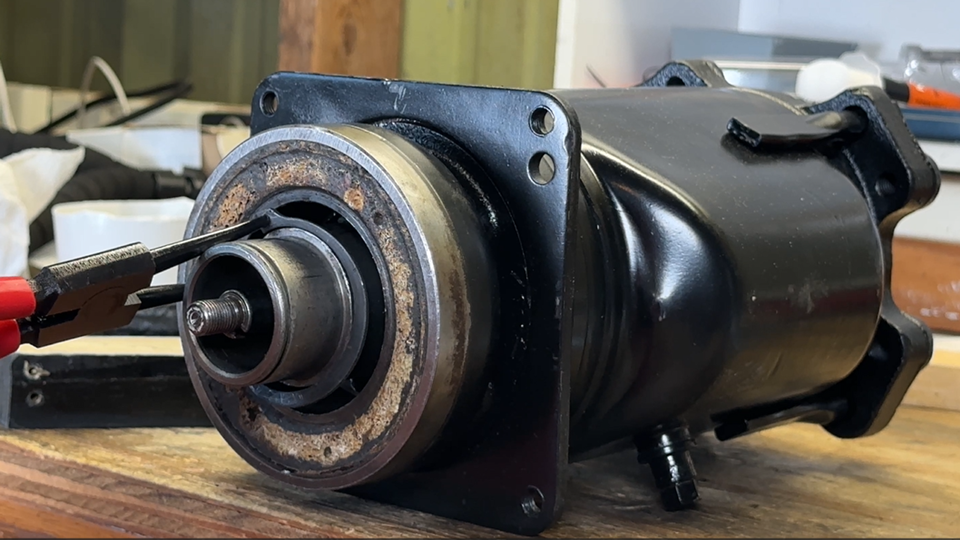
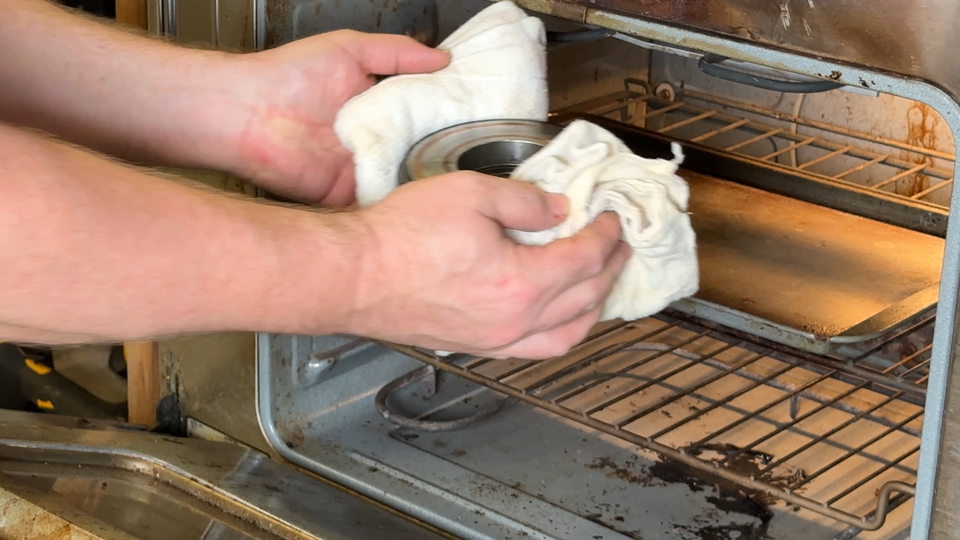
I changed the oil out to compatible ester oil, requiring 11 oil changes, which I found odd since the first cleared in 6. This is called foreshadowing.
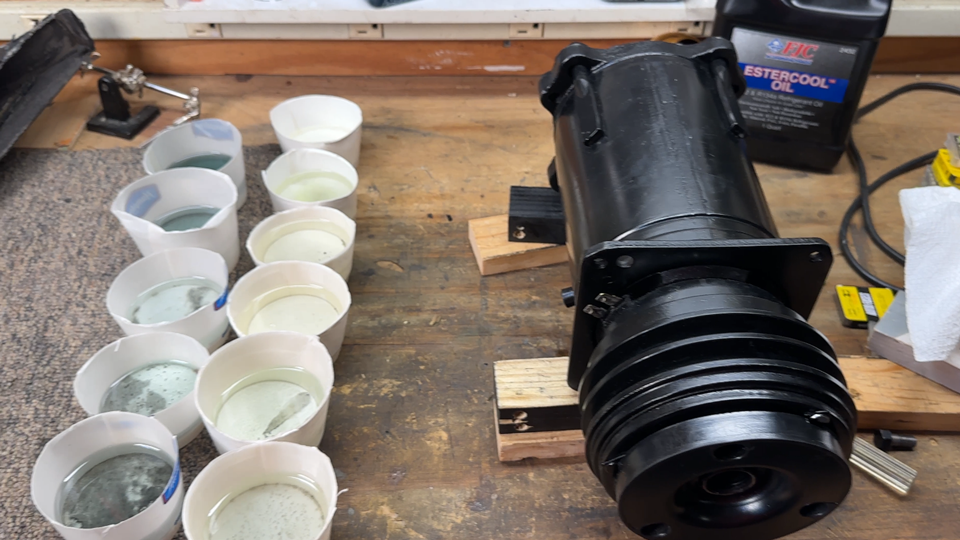
Since I had the rebuilt compressor on deck, I pulled off the one that seized and put a swab in the connectors. I brought out fine aluminum particles, so I knew the whole system had to be disassembled, cleaned and or refurbished or replaced!
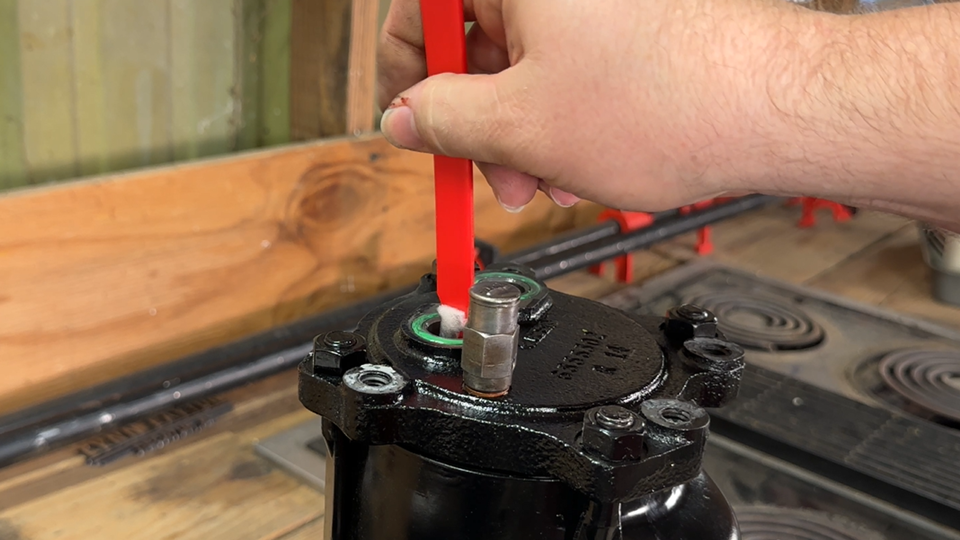
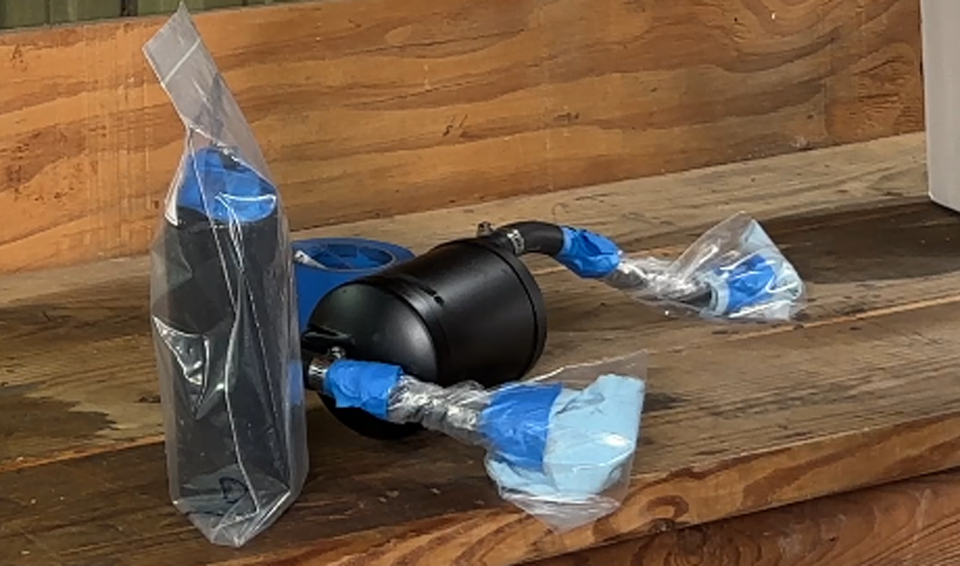
After a phone call with Old Air Products, I packed up the receiver dryer and muffler so they could ultrasonically clean, and rebuild each unit, respectively. These were shipped off at the start of the re-rebuild since they were long lead time. The STV got sent off to The Part Guy LLC to be rebuilt again.
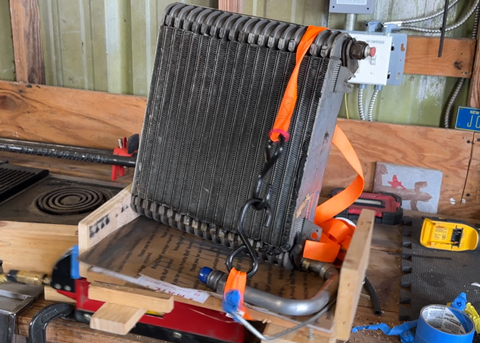
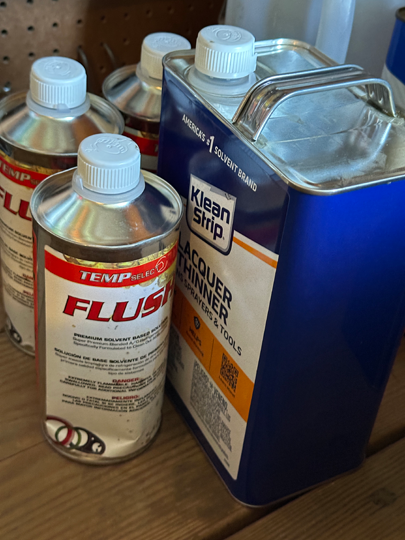
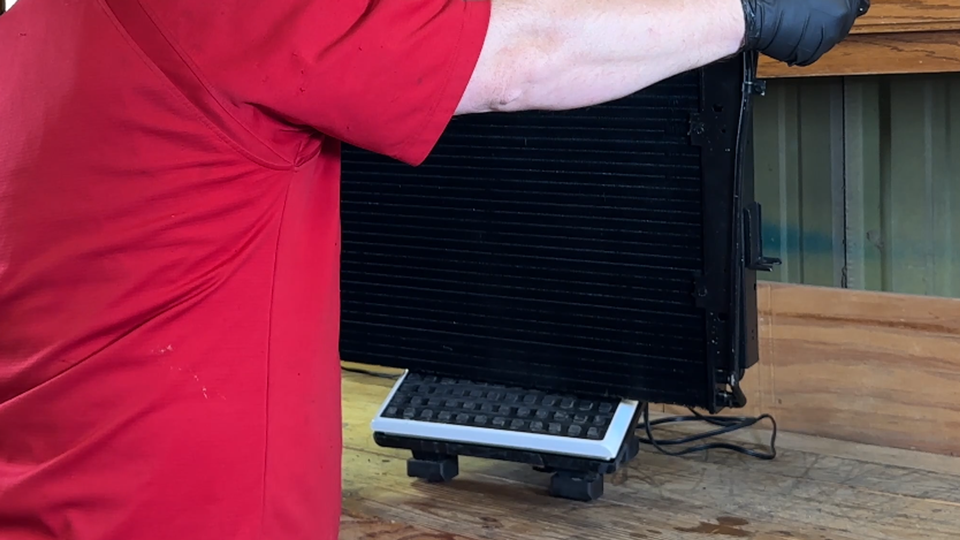
The evaporator core and box were removed from the car, and I started with Four Seasons AC flush (safety data sheet 60-70% Heptane, 25 – 35% Isopropanol), and then switched to Lacquer Thinner at the suggestion of the Part Guy website to clean the evaporator. I mounted the evaporator box to a piece of plywood just like the firewall of the car for ease of handling, and used a foot massager to vibrate the assembly to ensure a good flush.
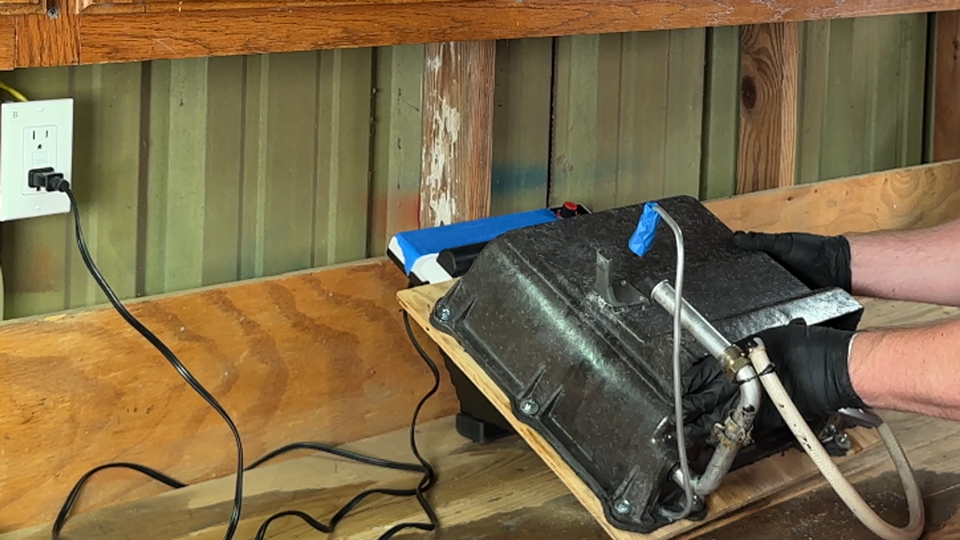
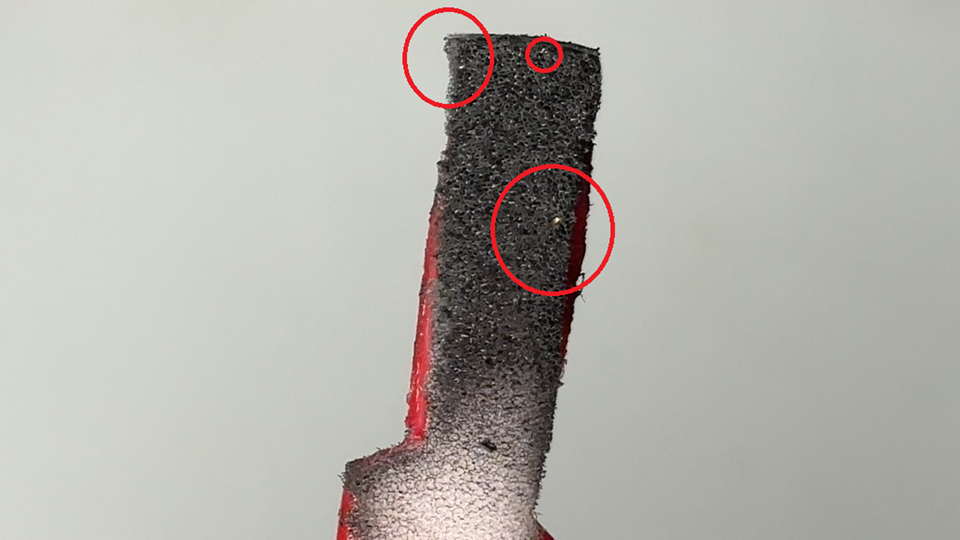
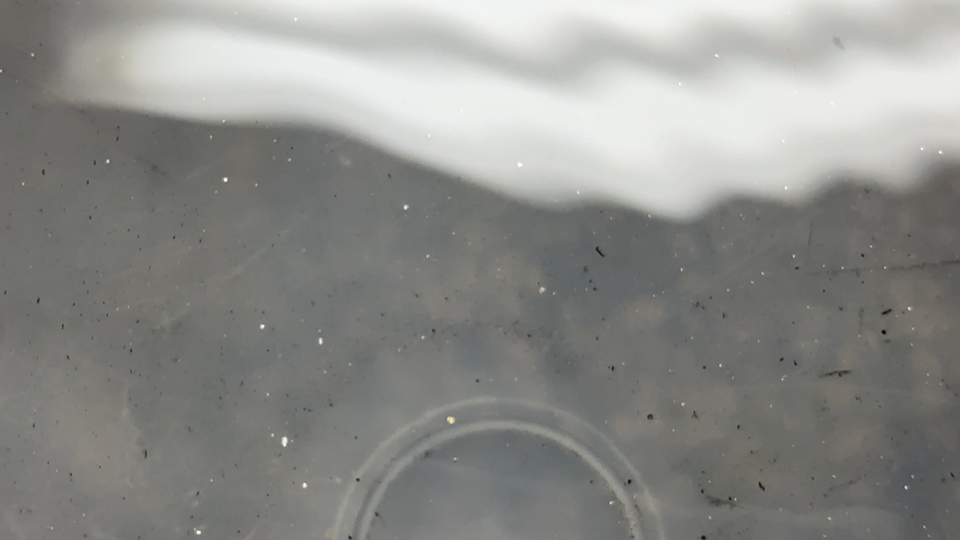
The first flush started off pure "black death", and by midpoint I was at big steel pieces, and then toward the end the smallest of aluminum pieces. The aluminum is really hard to see in the picture- look toward the bottom for what looks like bubbles.
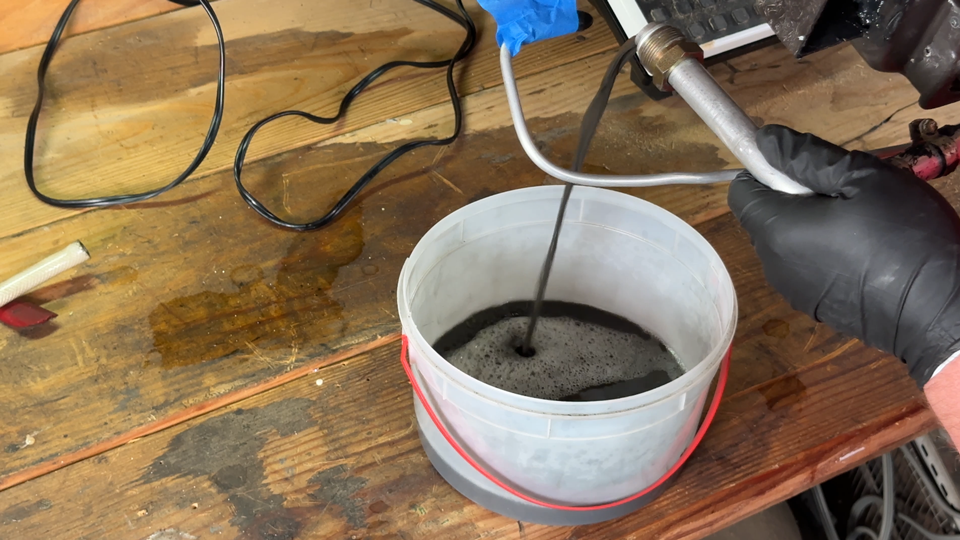
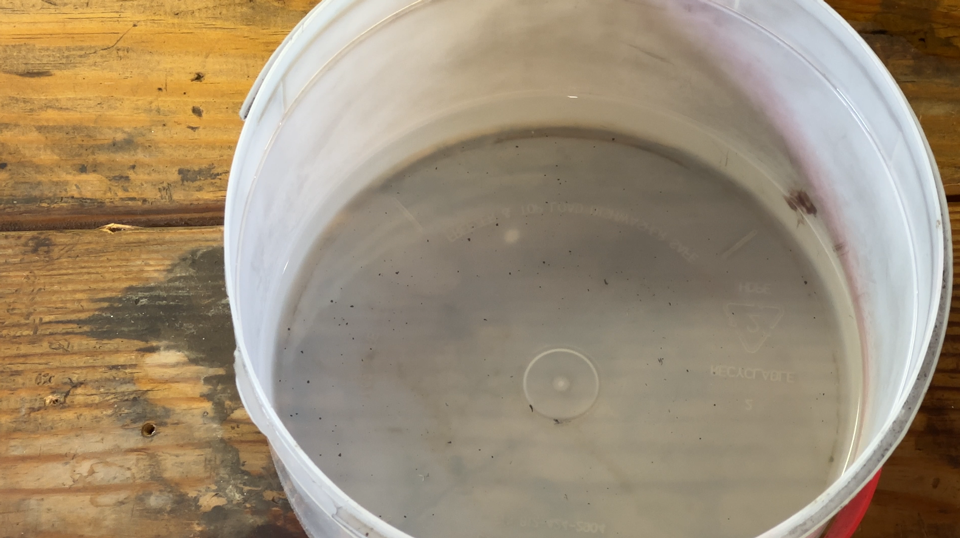
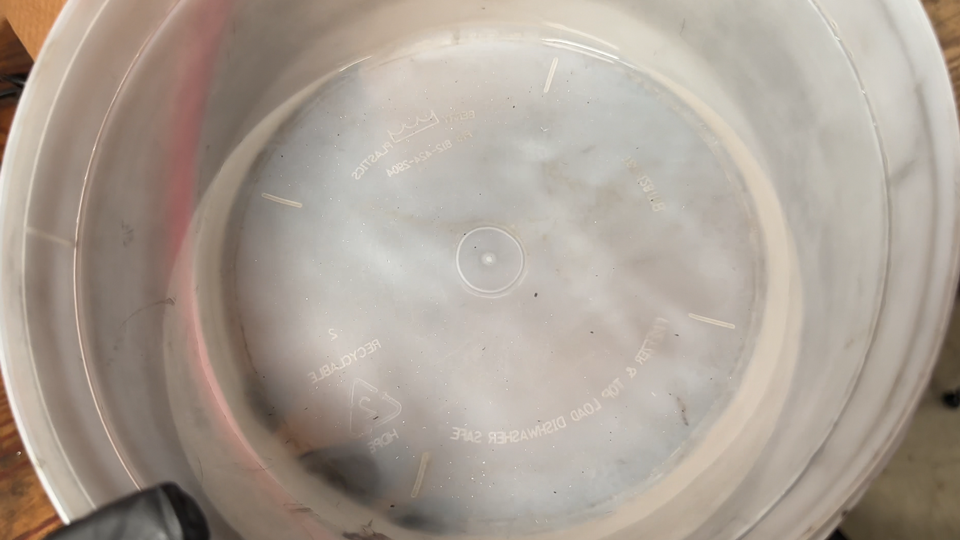
I made sure to flush the oil bleed line multiple times.
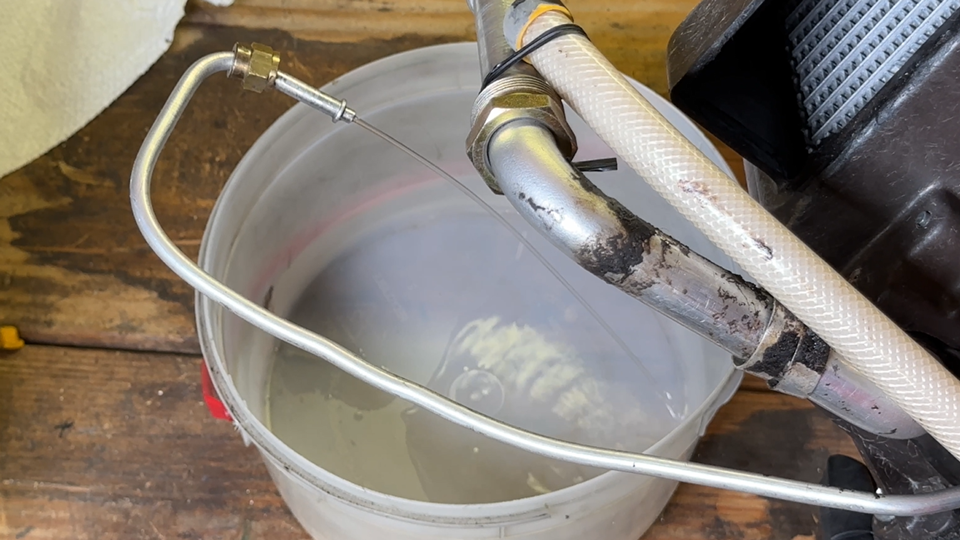
Over 30 flushes later, and it ran clear! I was so excited to finally see the light at the end of the tunnel! (Clear fluid at the end of the flush?)
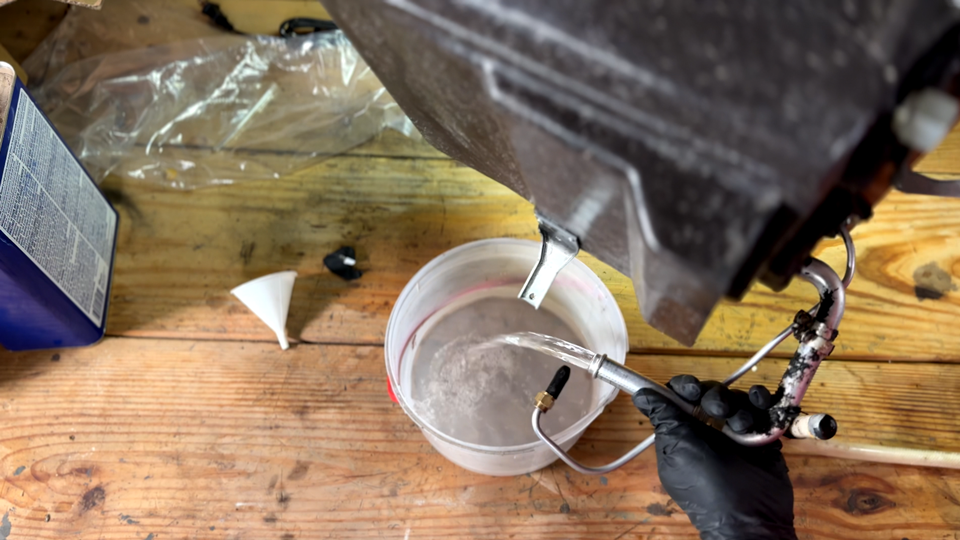
I flipped the box over after the final flush, and found most of the mounting brackets had broken. This was very disappointing. When I installed the part, I found it was 1/4 shorter than the original, but I figured Old Air Products did their research and I wouldn't have problems. I only had thread engagement at the end of the "prongs." Turns out, there is just not enough meat on the mounting brackets since it doesn't match the OEM.
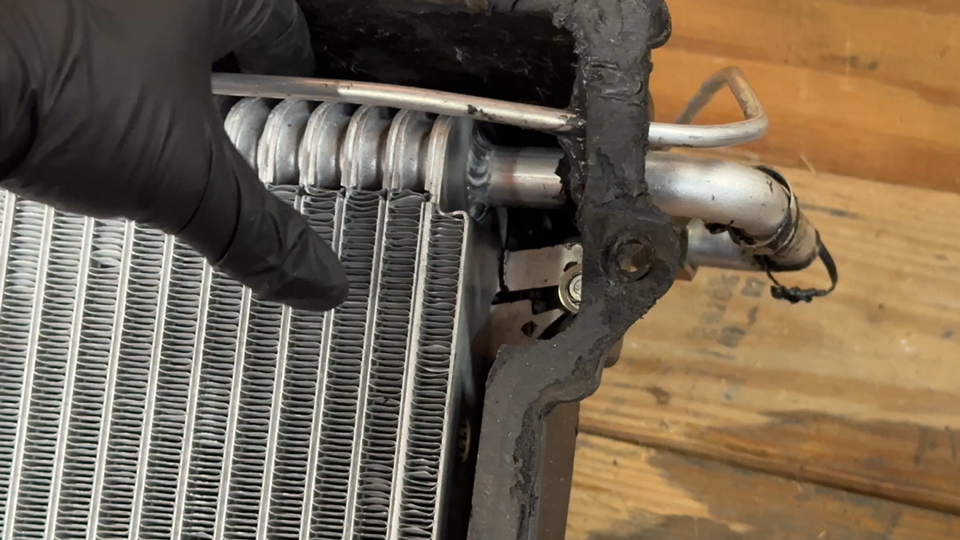
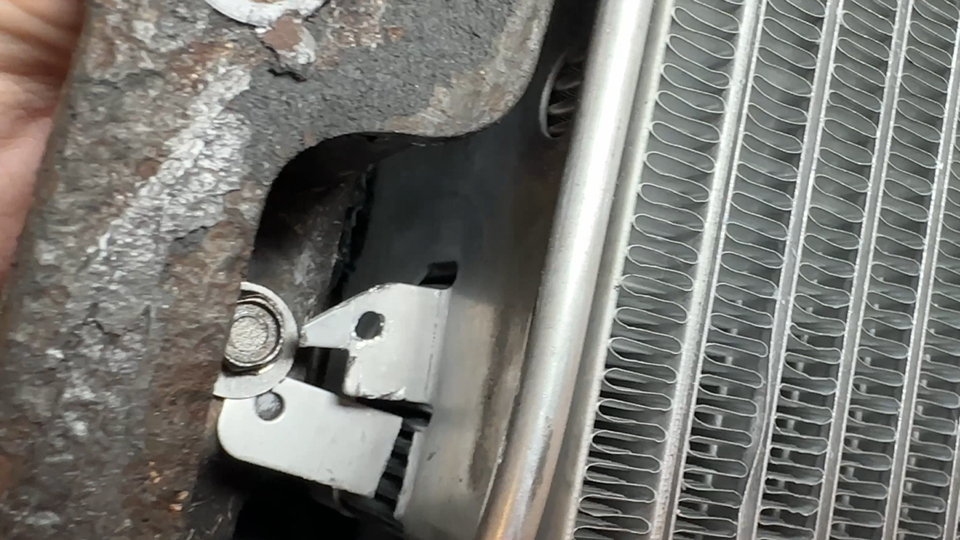
OAP evaporator on the top, listed specifically for these cars (not universal), and factory Frigidaire, below.
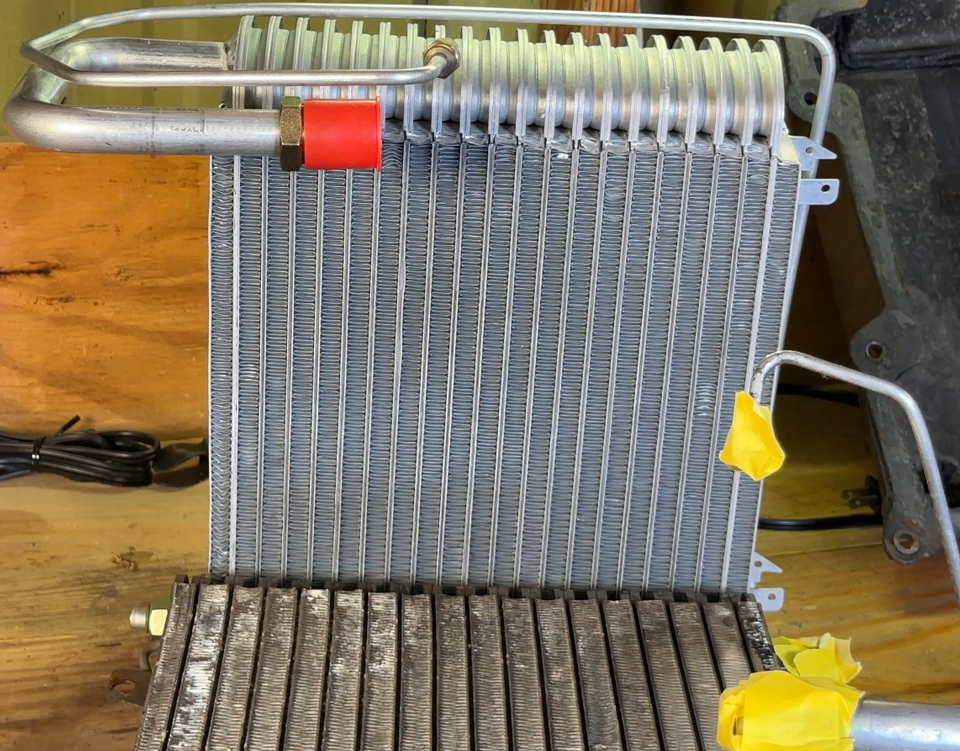
I called Old Air Products about the fact it really didn't fit and broke hoping to get some consideration. My logic was would this be that different from driving down a gravel road vibration-wise? Wouldn't the same thing happen over time on the car? They went above and beyond and said they would send me a brand new evaporator at no cost, they only had to check with their boss to see if I would need to return the old one. After two days of not hearing from them, I called back, and found out they would not be providing a new one. I get their position, I just wished they had figured it out before they had broke their promise to me. They did make me a slight deal on a replacement, and when it arrived I made brackets to make it fit. It is very frustration to pay a premium for a non-universal part, and then have to make it fit your needs.
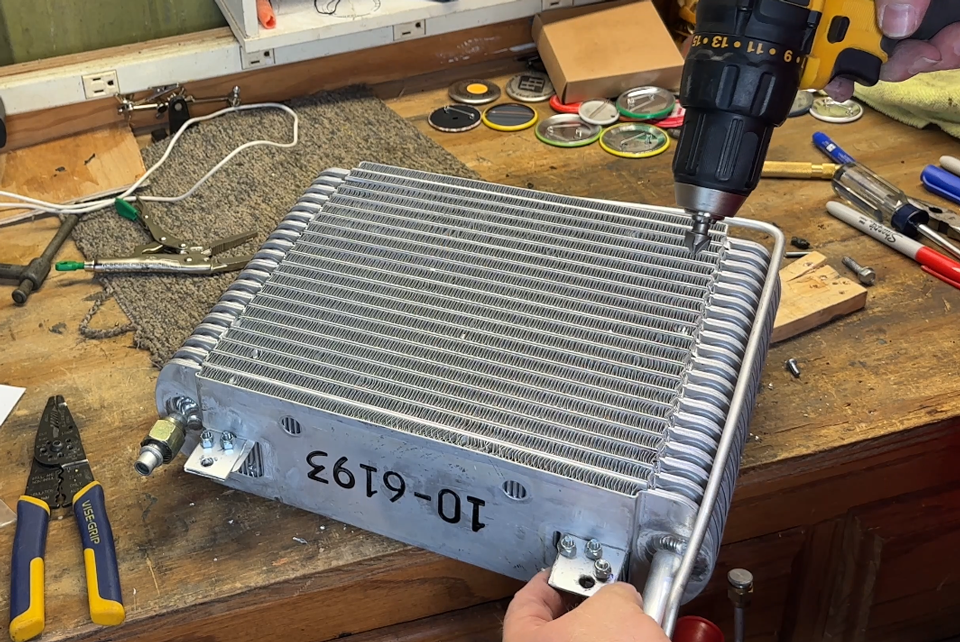
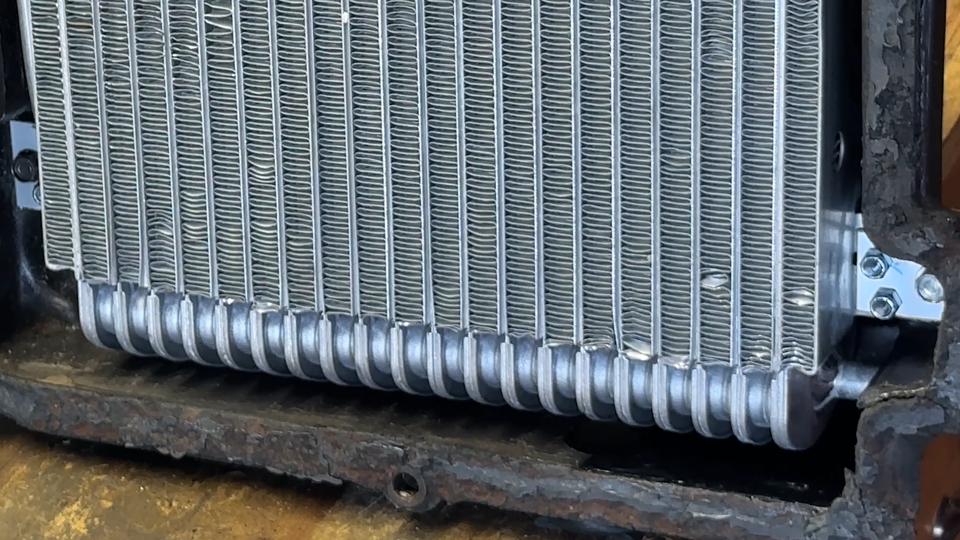
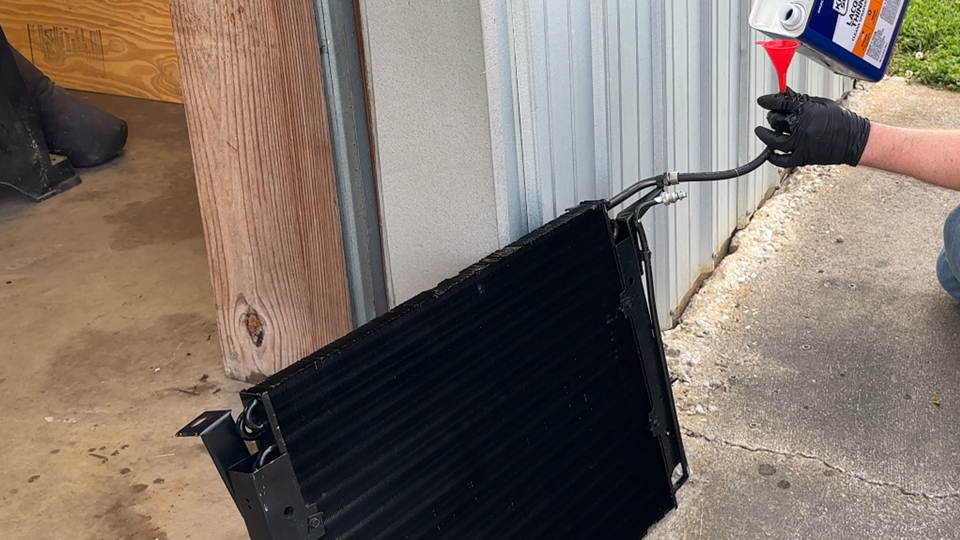
The condenser from Auto Air Solutions took 8 flushes and 3 gallons of lacquer thinner to get clean. I am happy to report it survived the foot massager vibration table.
 3
3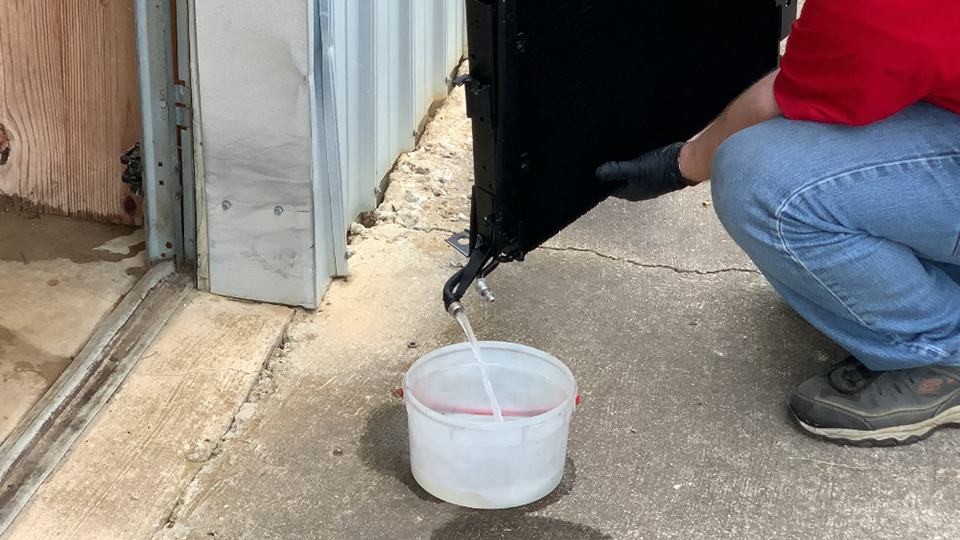
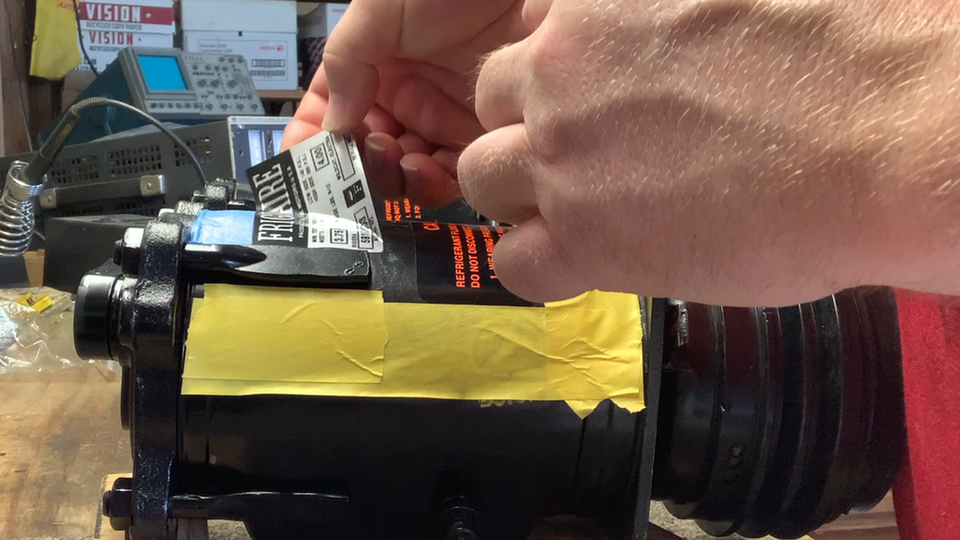
With the electromagnet re-clocked and the oil changed, the refurbished compressor got the OK BUICK FINAL TEST stamp courtesy of some Testors paint and reproduction stickers. Myself and the gentlemen who rebuilt the compressor have always put the stickers and stamps back in the same place, so they are purposefully not perfect, but just like they came on the compressor from Buick.
Another new expansion valve was procured for the evaporator. These are Advance Auto T38622 (relabeled Four Seasons) and have a lifetime warranty. They are labeled as for 134a, but widely proven online to work fine with R12. For $25 of 2026 dollars, it is not worth trying to flush an expansion valve. I paint the capillary tube and equalization line silver to match GM. Below, I purchased NOS screens for these valves which have been discontinued. They are Four Seasons part 38990, and cost $10/each. I've started building insurance policies where I can.
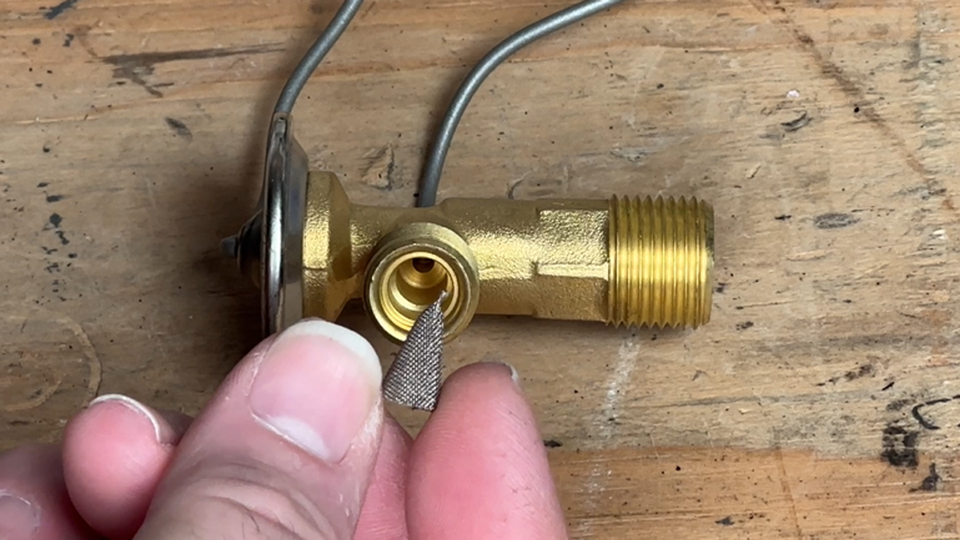
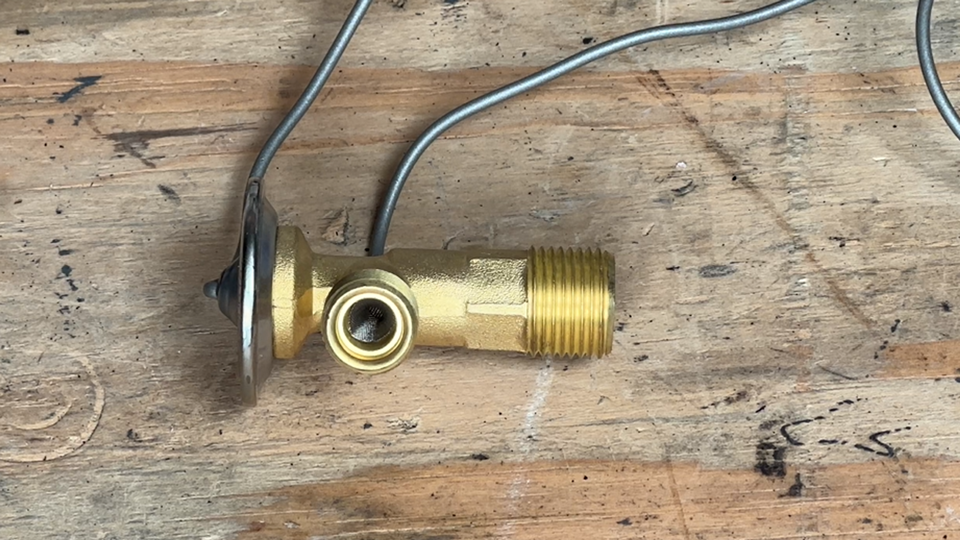
The expansion valve is put on before the box is installed in the car.
The original mounting clamp for the expansion valve will work with these modern valves, it will just mount at an angle instead of straight up and down. The newer expansion valves are a smaller diameter than the originals, allowing this.
For another insurance policy, this time I used removable RTV on the heater box. 3M strip caulk won't stick to the existing gasket, and it was quite hard to remove the case after the last time I put it on with Right Stuff. My only caution is it appears this stuff doesn't sell well and sits around and gets old. When I brought the brand new package home, the top 1/2 was hard and wouldn't dispense. I had to punch a hole in the side to squeeze it out.
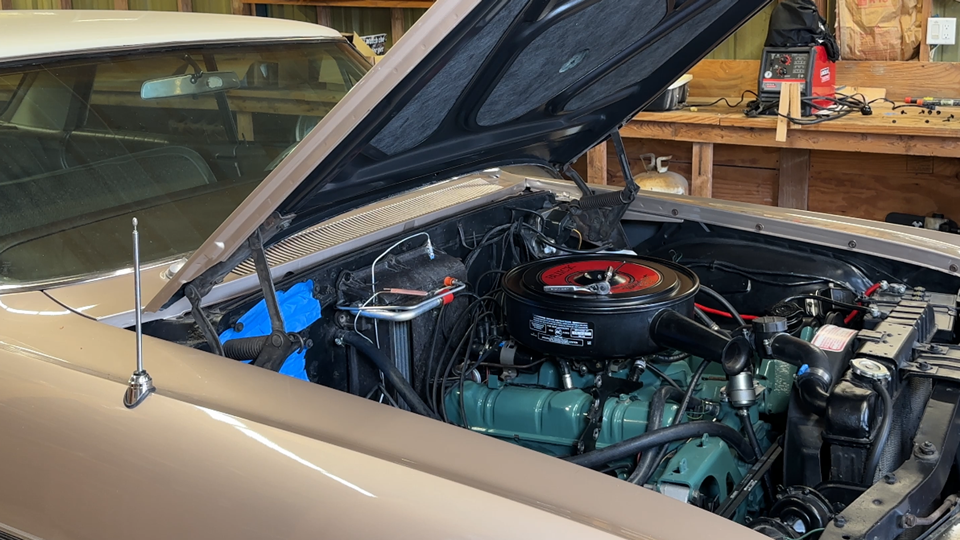
The evaporator and expansion valve are installed on the car.
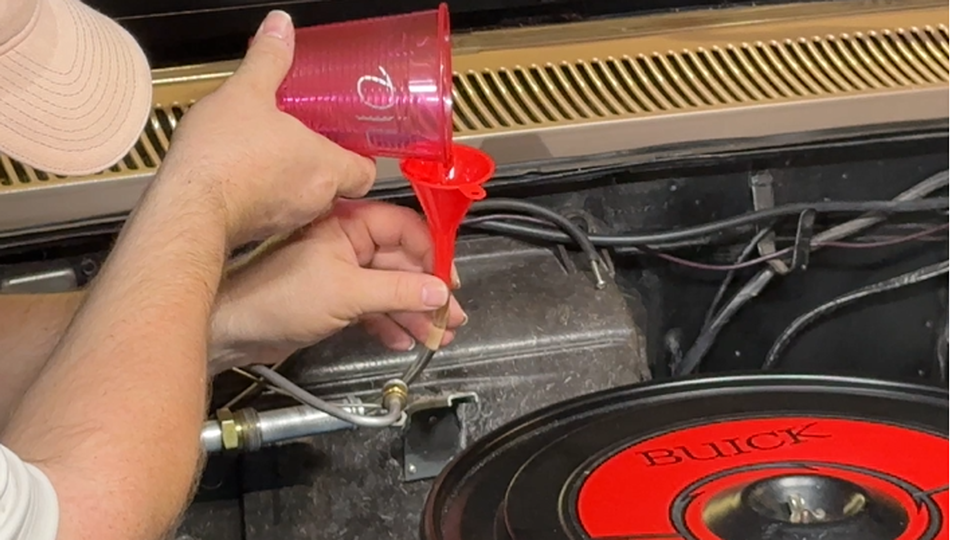
Lessons learned that the system gets 10.5 ounces of oil, not just the 6 in the compressor, I add oil to each major component. Compressor got 6 ounces, everything else a few ounces until it totals out to 10.5.
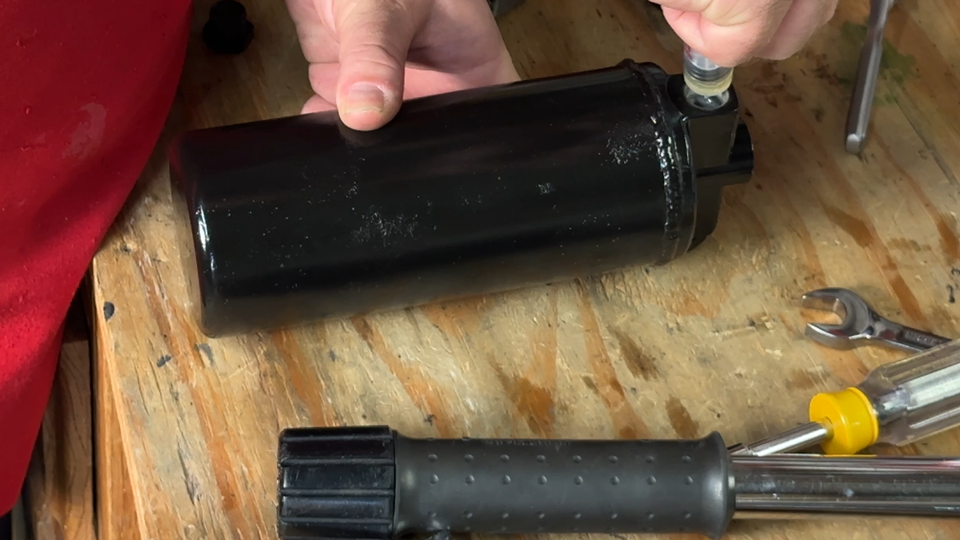
Rebuild receiver dryer returned, it also got oil in it.
The STV rebuilt for the second times shows up.
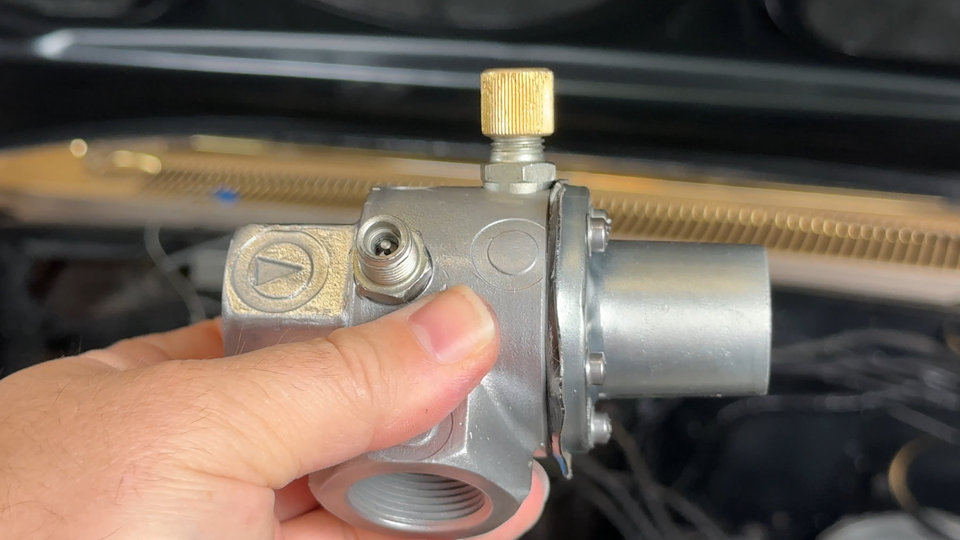
After the STV is installed, Old Air Products tacky tape 21-0617 is installed over the expansion valve sensing valve. I like the look of the Old Air Products tape- it matches the factory 100% correct. I had purchased a roll of Four Season tacky tape off Amazon for cheaper, but the product didn't match the picture when it came and wouldn't have matched the original, so it got sent back.
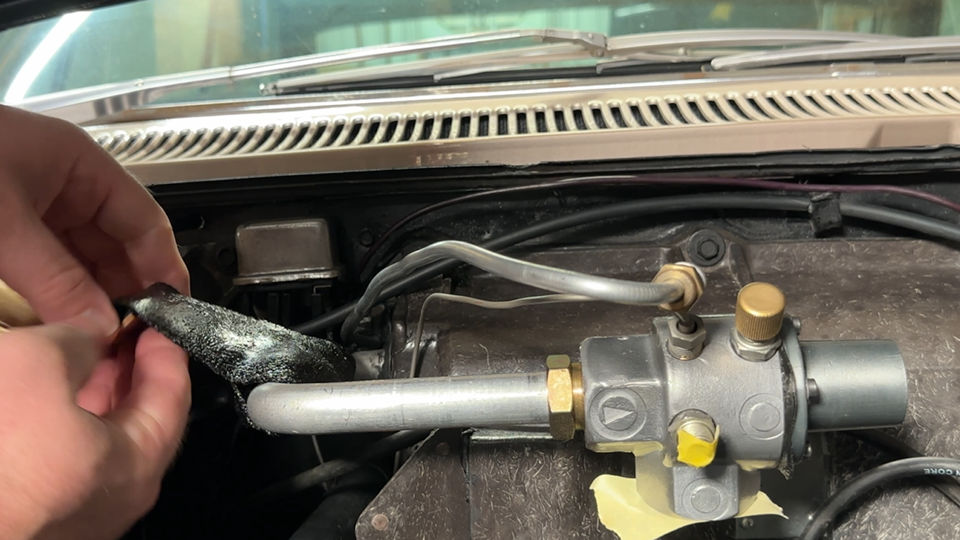
Significant reassembly of the AC complete. Only thing lacking is the muffler. The vendor sent it back. After initially stating they would ultrasonically clean it, they called back a month later and declined.
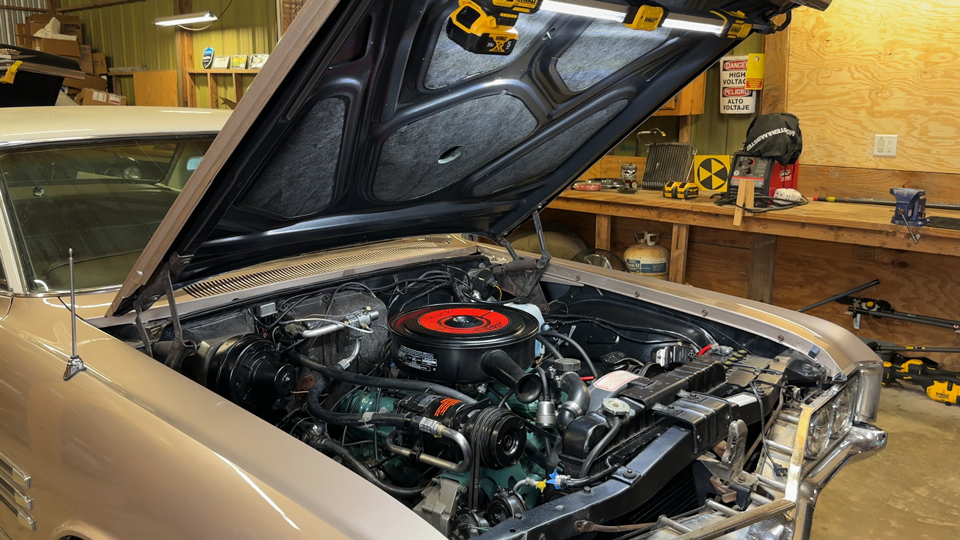
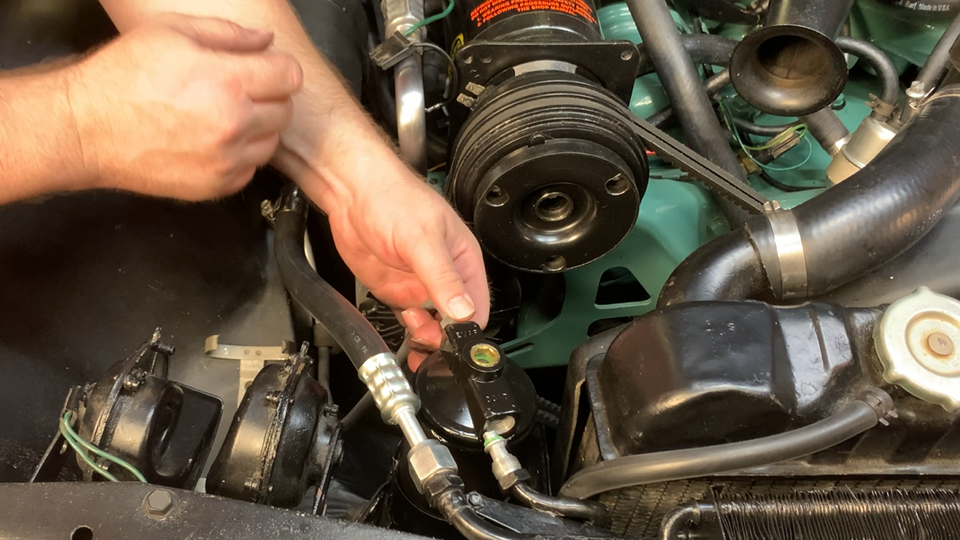
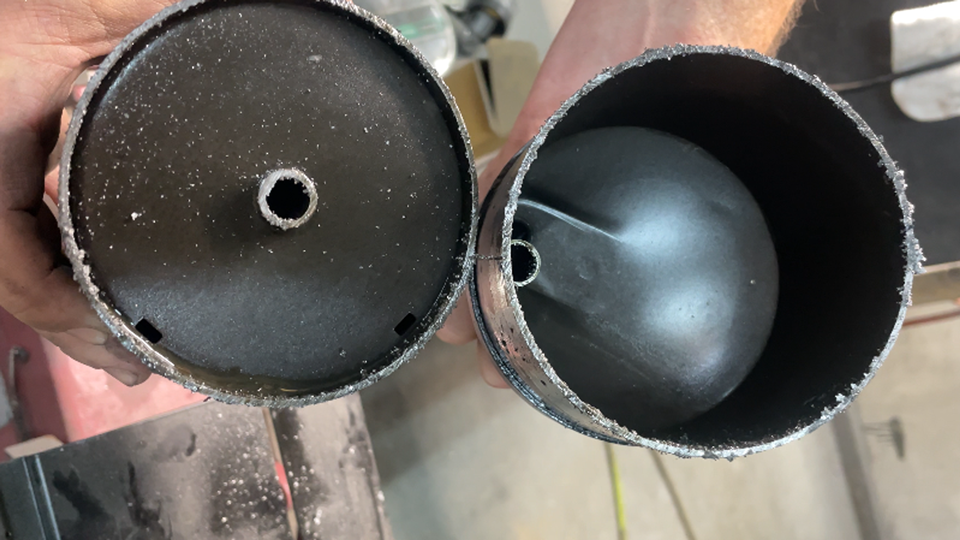
What does the inside of a 1964 Buick Air Conditioner Muffler look like? Question answered below. I was racking my brain thinking who could cut, clean out, and and weld the AC muffler. I finally thought of a local alloy wheel repair company I use for my modern vehicles. They can cut, weld, and have access to chemicals that will make metal brand new. Below, the muffler was cut in half. There are two chambers. The second chamber is shown in the second picture, which is the back side of the chamber to the left.
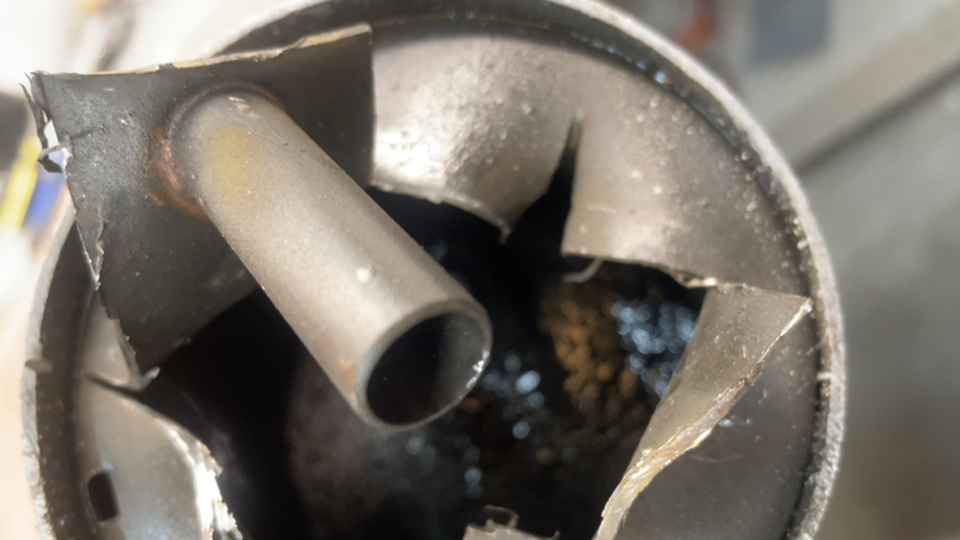
Once the muffler was cleaned out, it was re-welded. Like above, it got a dose of oil as a major component, and to keep the inner steel coated until I got the system closed up.
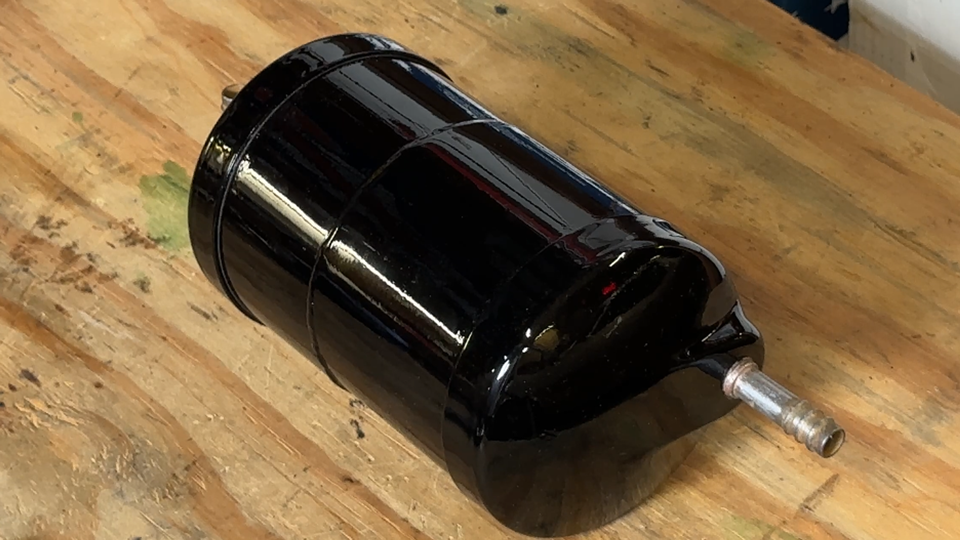
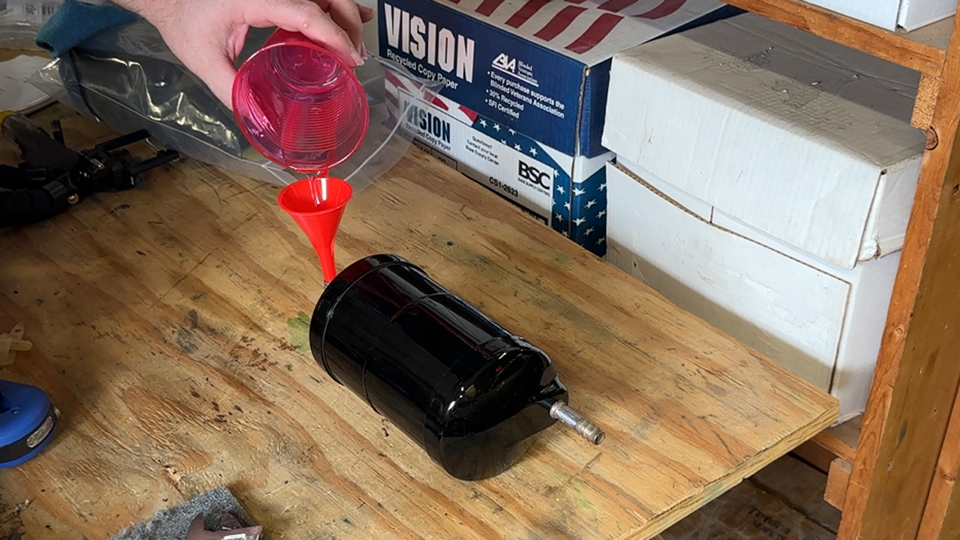
A reproduction factory-correct muffler insulator was placed around in, hiding the weld, and it was installed.
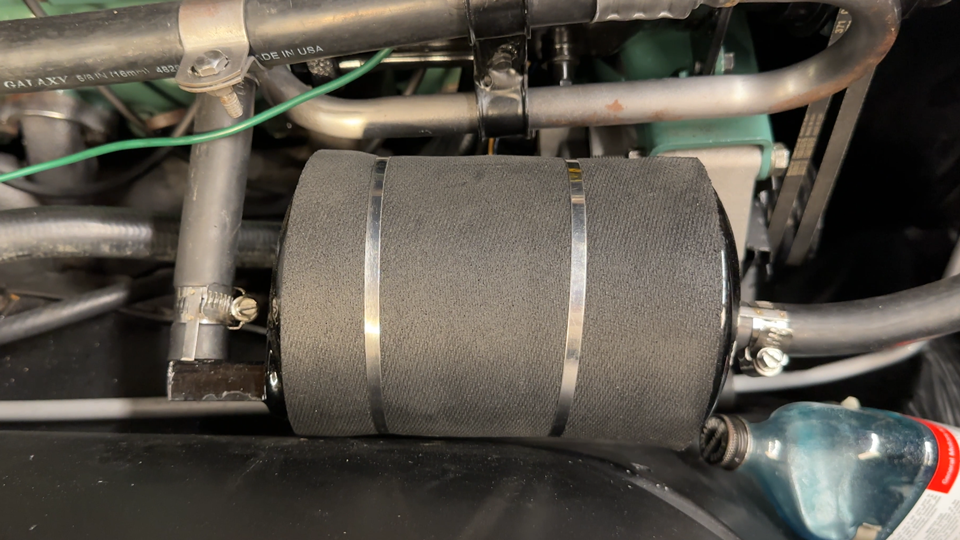
If you don't have a way to get the muffler repaired or flushed, they can be bypassed without negative issues. Below is my new hose from Cold Hose that I cut in half to place the muffler between it. The picture shows an example of what it could look like with a bypassed muffler.
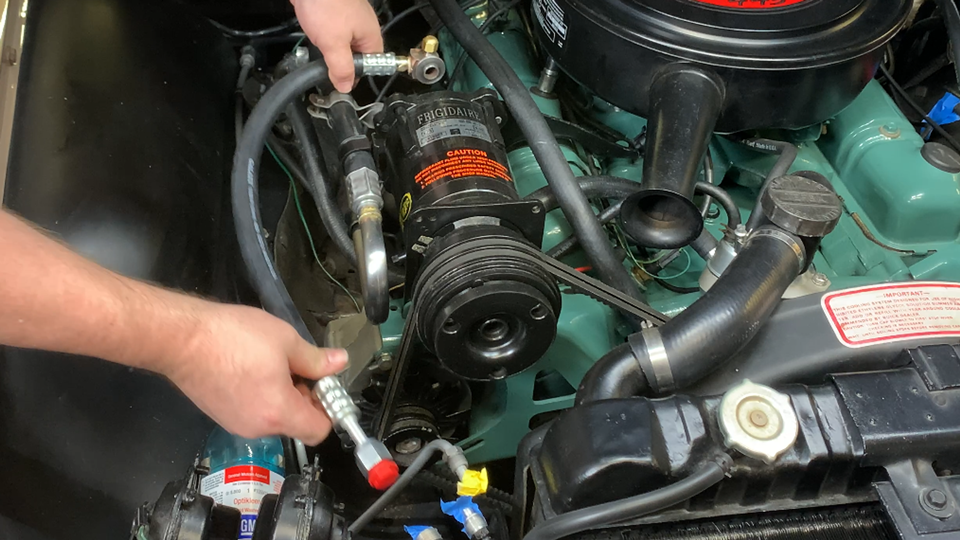
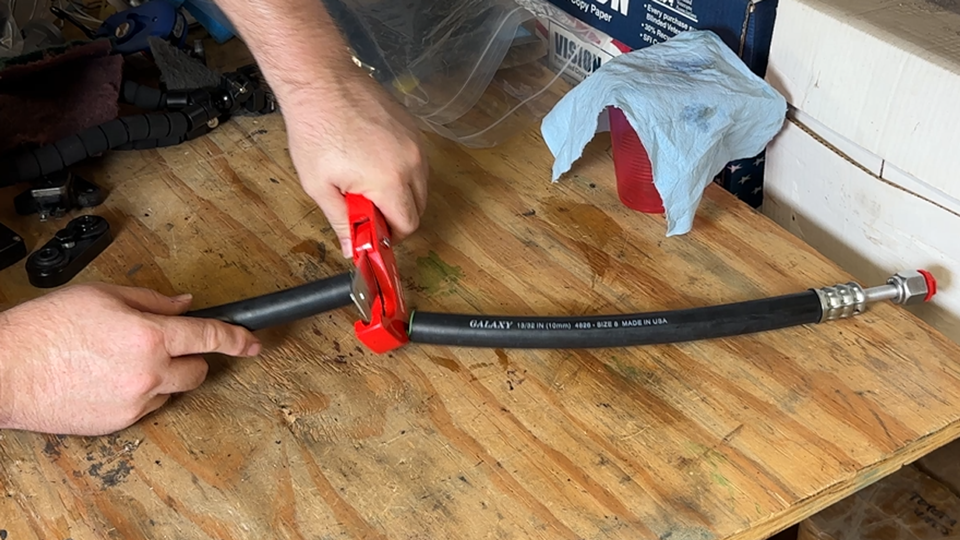
When I got everything back on the car, the car would lose vacuum over 12 hours. This never happened with the first install.
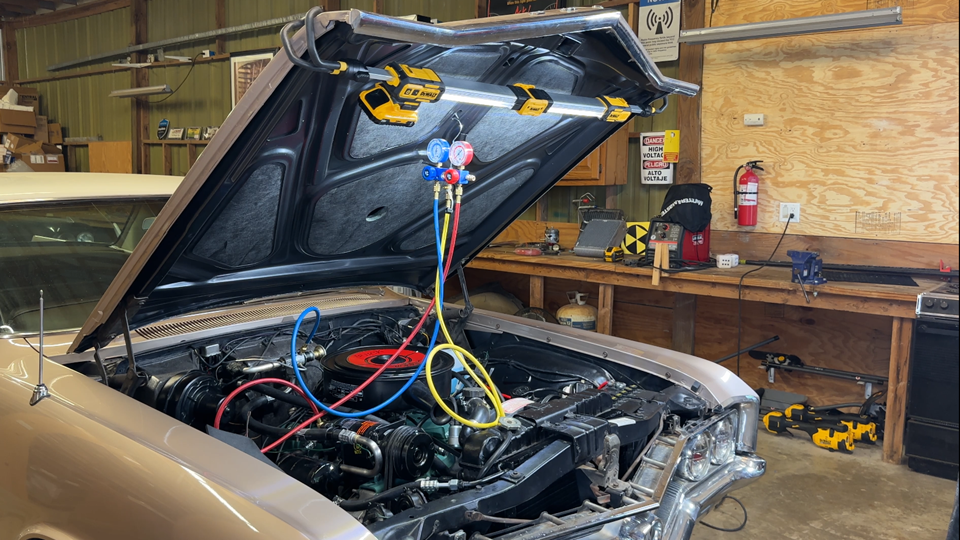
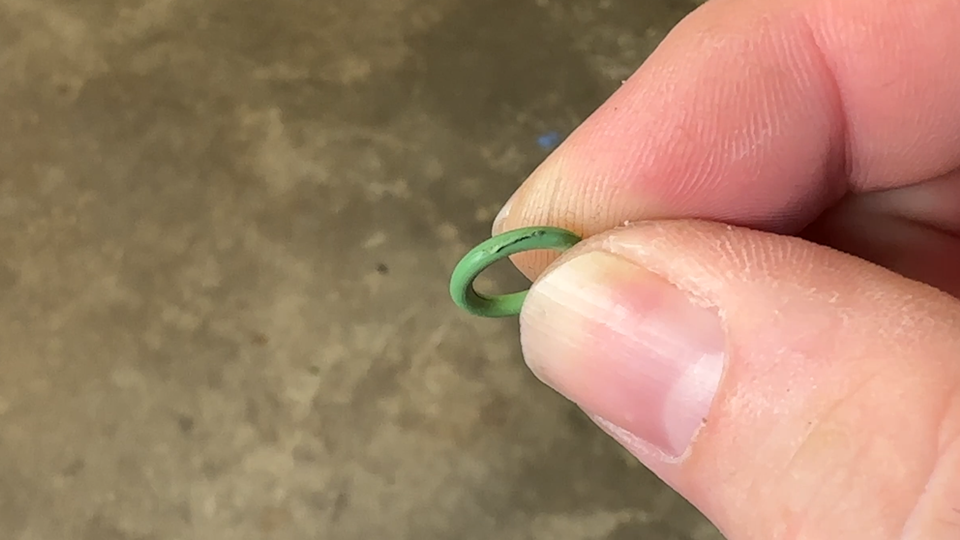
I tightened all my connections, and replaced two O-Rings that didn't look 100%.
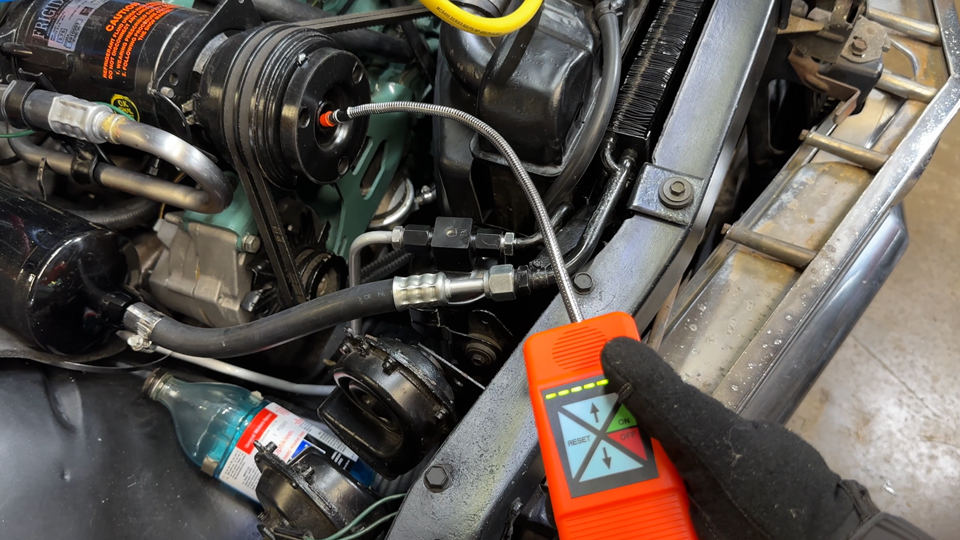
I couldn't get it to hold vacuum. Since I have access to a recovery machine, I put a small charge of refrigerant in and leak tested the system. The only place the detector went off? The front of the compressor! Even though I had rotated the compressor and held it facedown on the bench like Four Seasons recommended, it still leaked, and it was such a massive leak the detector alarmed at the least sensitive setting. The system leaked no other place. Judging that I had to change the oil in this compressor twice as many times as the first, I think it was also damaged in shipping. Wish I would have thought to do a vacuum test before I stickered and stamped it!
At this point I decided to bite bullet and buy a new Alma Products (APCO) A6 compressor. I didn't want to do this at first because the screws were metric, but now being on the third compressor(!) for the project, I figured why not. Doing my research, I saw evidence all over the place that Four Seasons sold the original Alma compressor under their 58088 part number, with a midspan change where they started the sell the Sunair S6 made in Malaysia aluminum compressor (commonly rebadged as the Pro6Ten) under the same 58088 part number. I don't buy any compressors at local parts stores, because they won't warranty a unit put in by a layperson (after my first fiasco, I could kind of see that). Alma closed December of last year, but it seemed there inventory was still out there.

Knowing this change happened, I reached out to a mail order vendor asking the right questions: Is the 58088 compressor you have in stock the earlier, made in the USA, black finish version? Their answer: Yes.
Compressor that showed up:
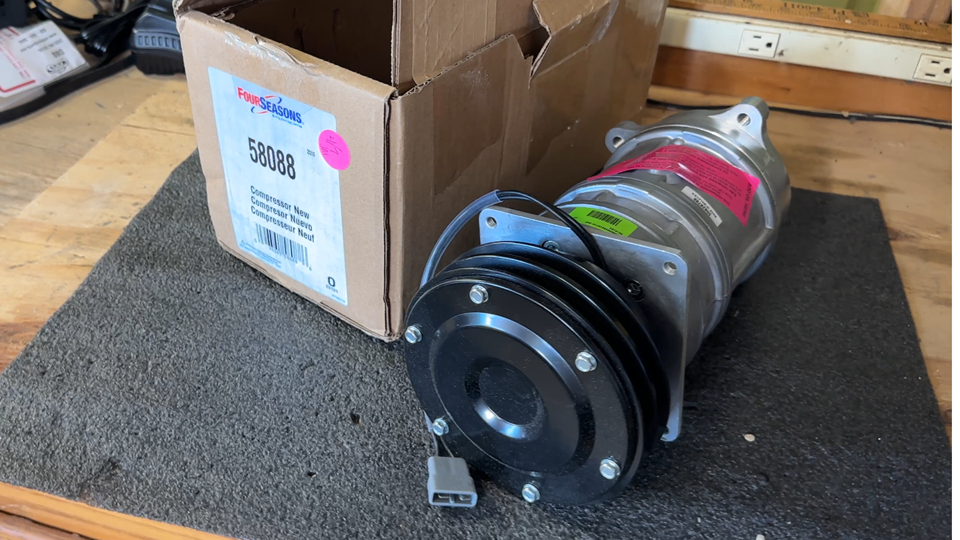
Get the return label, that goes back in the mail. Start engaging with mail order vendor B. Ask the same questions, even go so far as to ask for a picture. They say all the right things, then send me a stock picture of the Made in the USA Alma A6 I want.
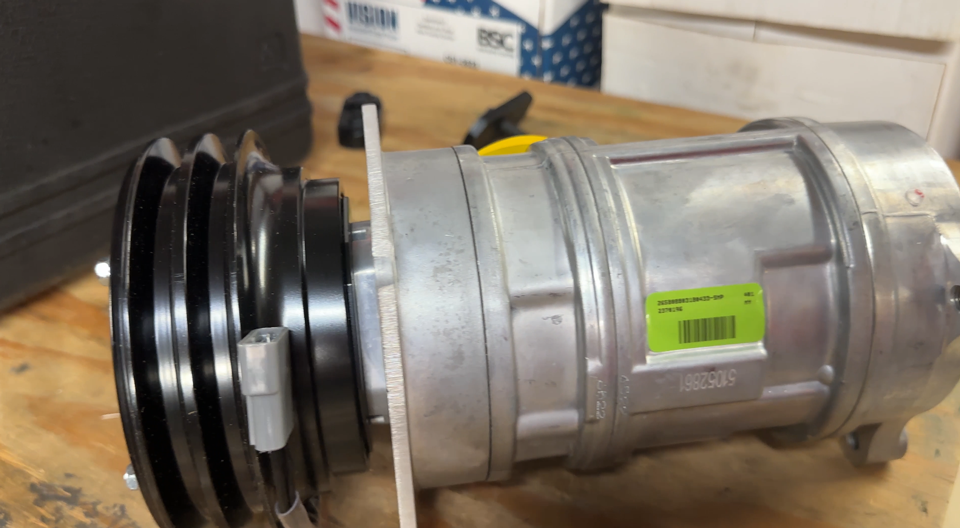
Guess what showed up the second time?
A second S6. It was much easier to return this one with all the back and forth, but took a heck of a lot longer to get back on my credit card.
During this time I already had an RMA open with RockAuto for the second unit that was ticking down fast. I didn't want to leave the system open, so I ordered from the quickest retailer I could get another refurbished one from: Jegs. It arrived with the most minor of outer box shipping damage of all of them.
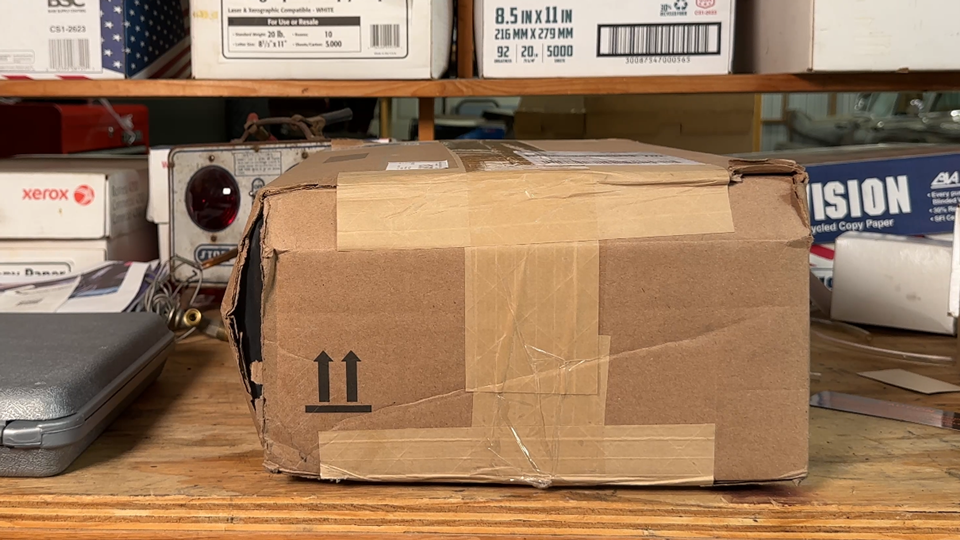
With the now sixth compressor I have had on hand, I did not pass go, did not collect $100, did not re-clock the magnet. The first thing I did was the change the oil 3 times from whatever it came with to FJCs Estercool, and then put it on the car and vacuum the system for an hour. Once it was vacuumed, I let it go 24 hours to make sure it didn't leak down. (The leaky one would finally get noticeable on the gauges around the 11 hour mark).
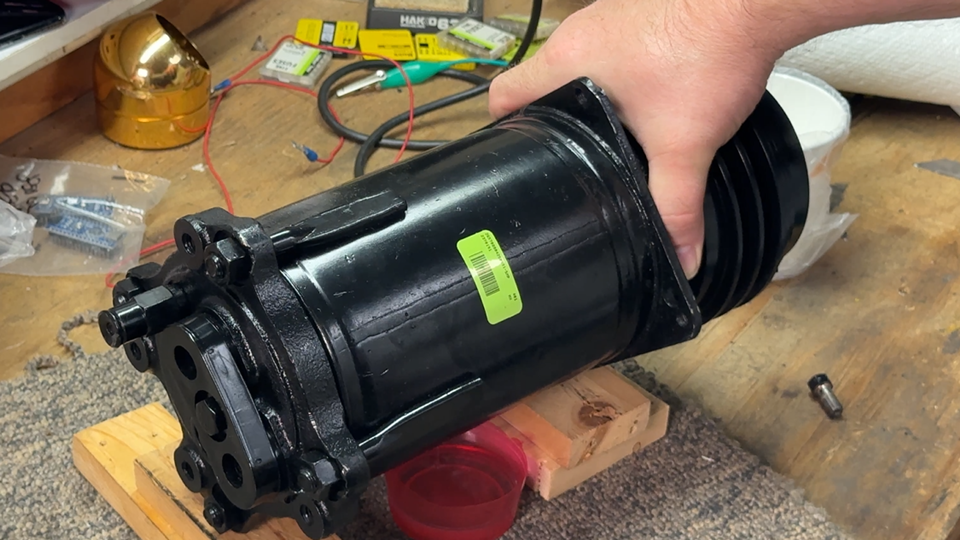
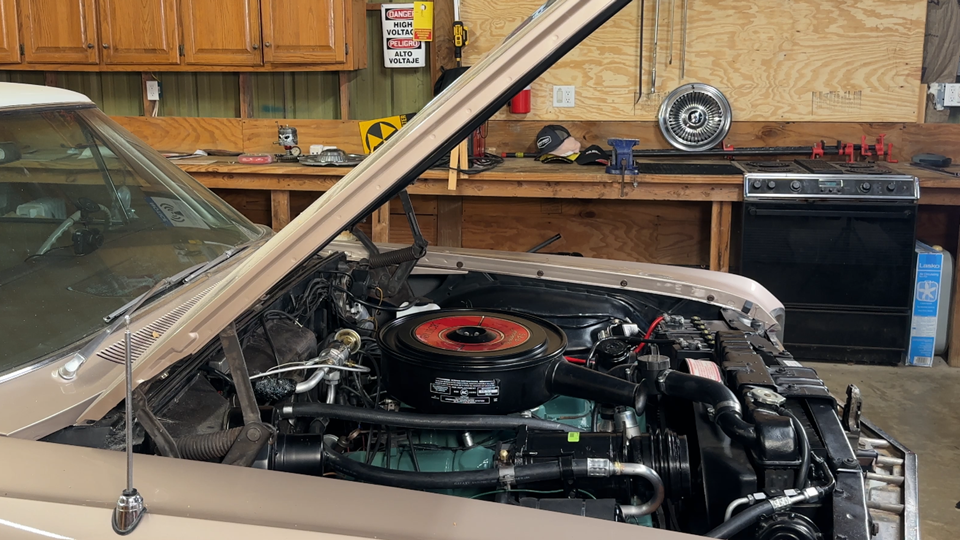
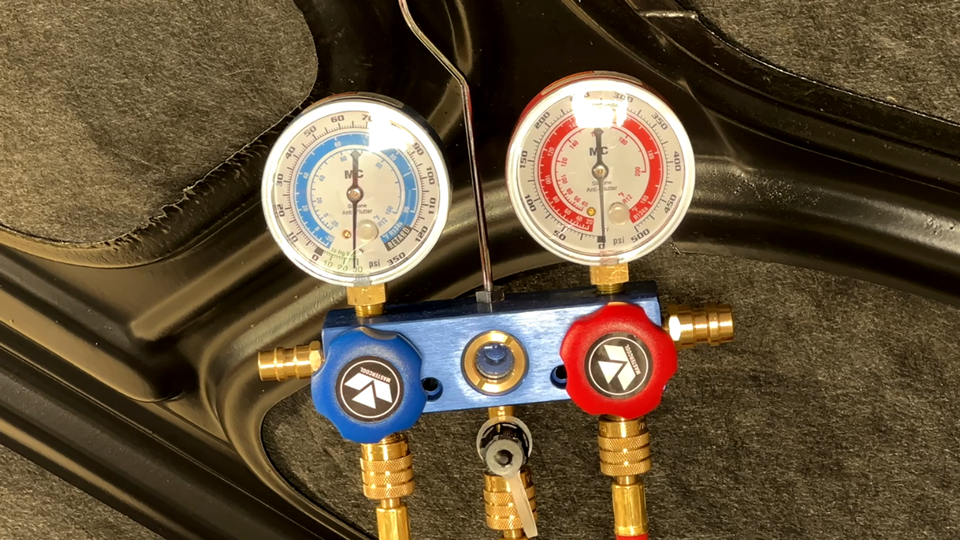
Once it passed the 24 hour leakdown test, I did a final oil change, this time installing 6 ozs of FJC Ester Oil with dye (another insurance policy and boy, is it fluorescent), and then re-clocked the magnet. It went on the car with no stickers "just in case", but I did stamp it because you can't get to that with it on the car.
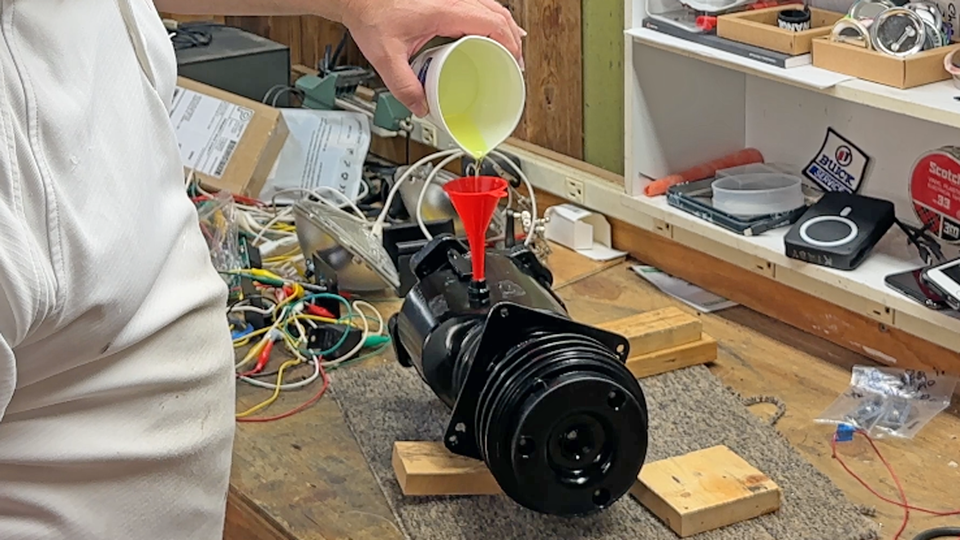
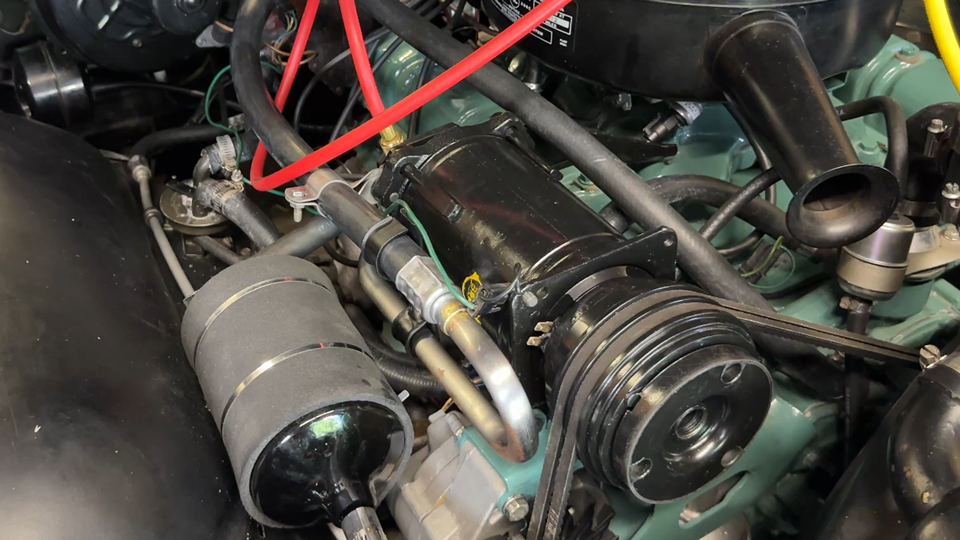
Vacuumed it overnight, then did a 24 hour leakdown. The new (to me, rebuilt) compressor passed! On to charging!
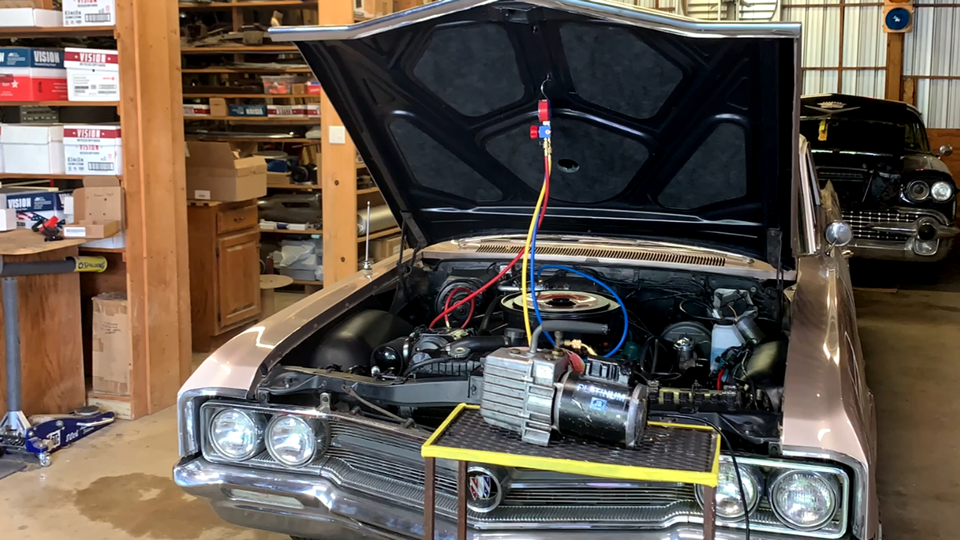
Ladies and gentlemen, I have a cooling R-12 Air Conditioning System!
Here's the video that shows all 10 months of work and when I got it over the finish line: